Industrial cocoa drying guidance from Enzymesbase: protect fermentation gains, manage moisture removal, reduce batch drift, and improve repeatability after mucilage breakdown.
Request pricingFermentation does the expensive biochemical work. Drying decides how much of that work survives.
For cocoa processing factories, the drying stage is not a passive moisture-removal step. It is a control point where flavor precursor development, bean acidity, shell condition, mold risk, and cut-test consistency can either stabilize or drift. A well-run fermentation program can still lose value if drying is too fast at the surface, too slow in the center, uneven across trays, or disconnected from batch history.
Enzymesbase supports processors as an enzyme supplier for cocoa processing with a practical view of the full post-harvest sequence: mucilage breakdown, fermentable substrate availability, heat build, acid movement, and the drying curve that follows.
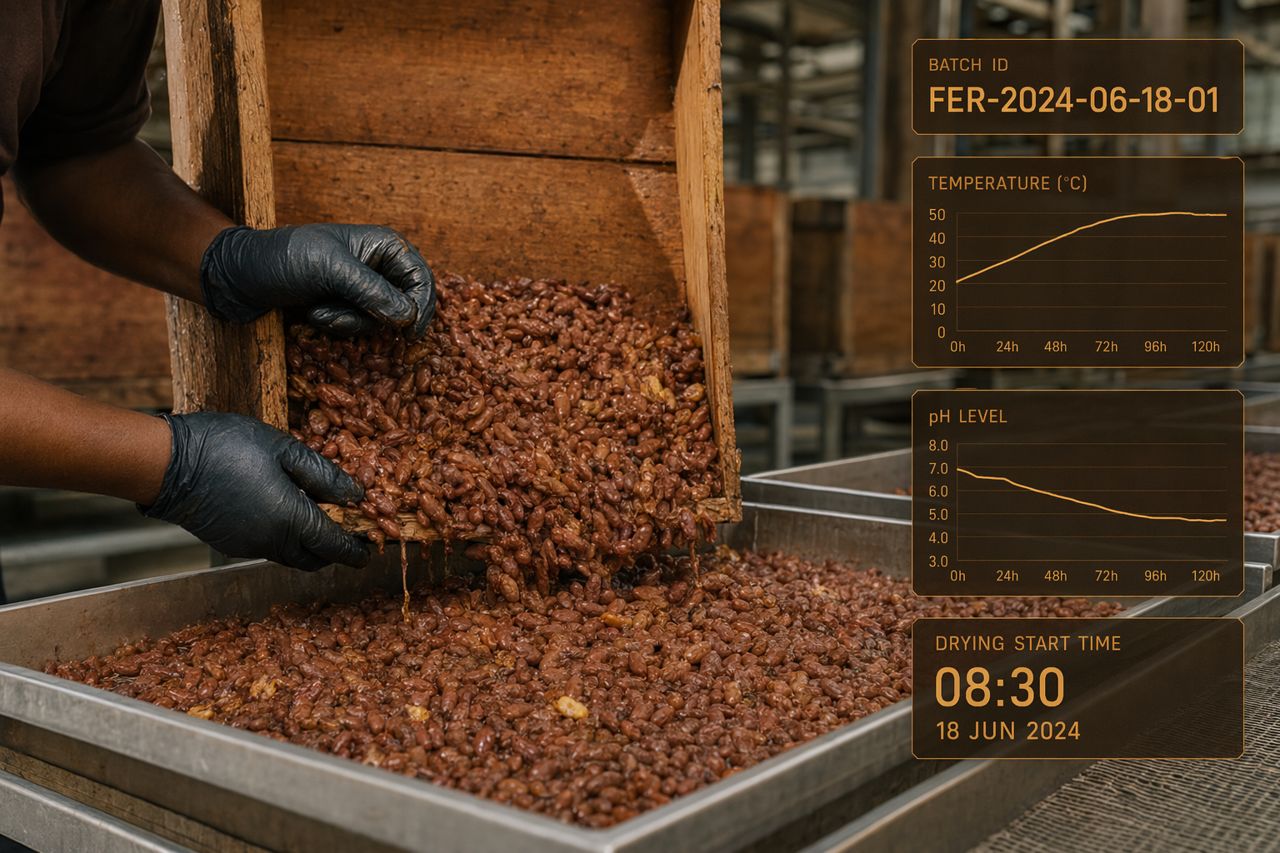
By the time cocoa enters drying, the beans already carry a chemical record of the fermentation box:
Drying cannot correct a poorly developed fermentation. But it can protect a well-developed one.
The key is to treat drying as a continuation of batch control, not as a separate utility operation.
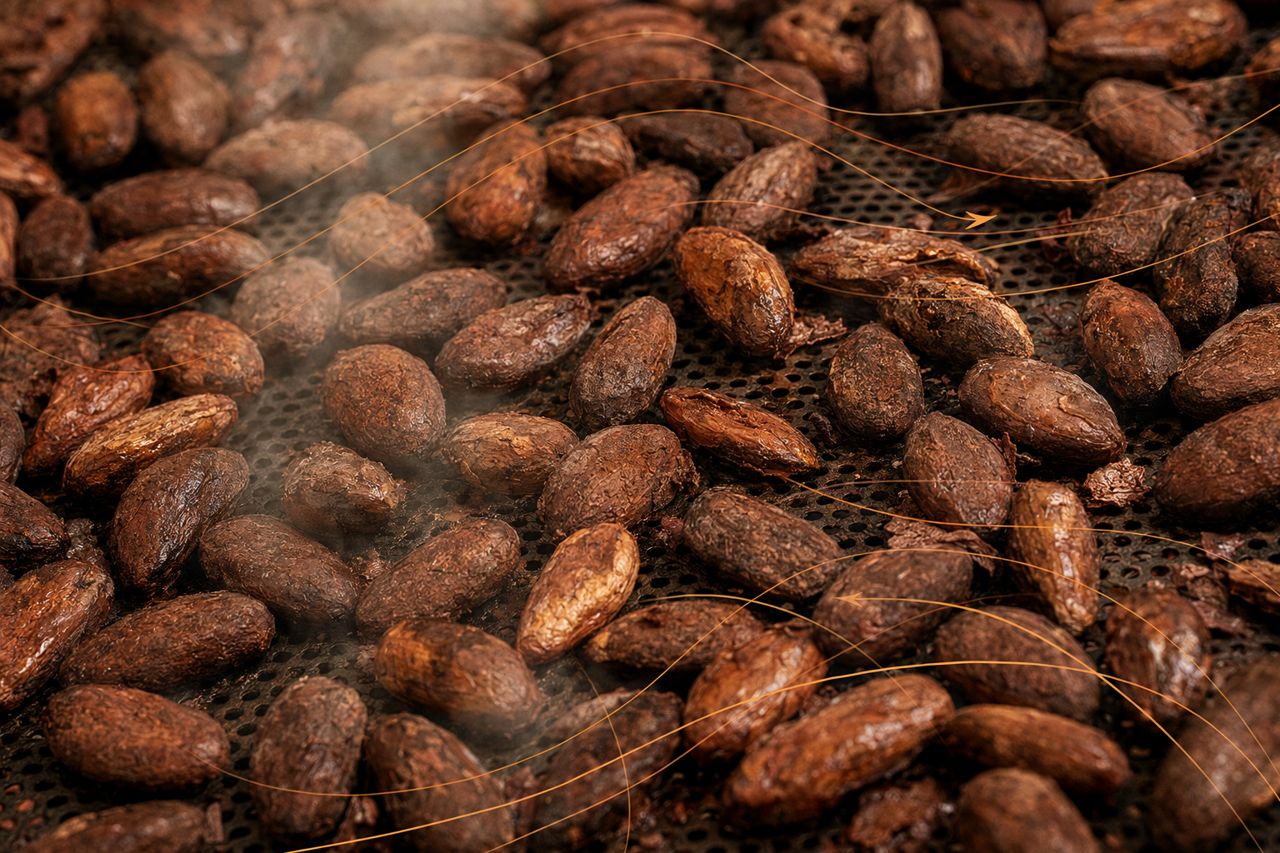
Factory teams often face pressure to move beans quickly, especially during peak arrivals or wet weather. The risk is case hardening: the bean surface dries too quickly while internal moisture remains trapped. That creates uneven moisture migration, variable acidity retention, brittle shells, and inconsistent roast behavior downstream.
In practical terms, fast external drying can lead to:
The target is not simply speed. The target is controlled moisture removal without erasing the biochemical progress built during fermentation.
Drying performance starts before the dryer is loaded. Residual pulp thickness, viscosity, and drainage define how much water and soluble material remain around the bean surface.
When mucilage breakdown is uneven, the dryer receives beans with inconsistent surface conditions. Some portions of the batch dry cleanly. Others retain sticky pulp, slow-moving moisture, and localized microbial risk. Operators then compensate with longer drying time, higher heat, or more manual turning.
That is where enzyme-supported fermentation strategy can create upstream value. Better-managed mucilage degradation can improve pulp liquefaction, drainage, mass aeration, and batch uniformity before drying begins.
The drying team sees the benefit as:
A final moisture specification matters. But the path to that endpoint matters just as much.
A controlled drying curve should support three operating goals:
Fermentation creates amino acid and reducing sugar conditions that influence cocoa aroma formation later in roasting. Harsh drying can compromise the balance by intensifying acidity, changing internal diffusion behavior, or stressing partially fermented beans.
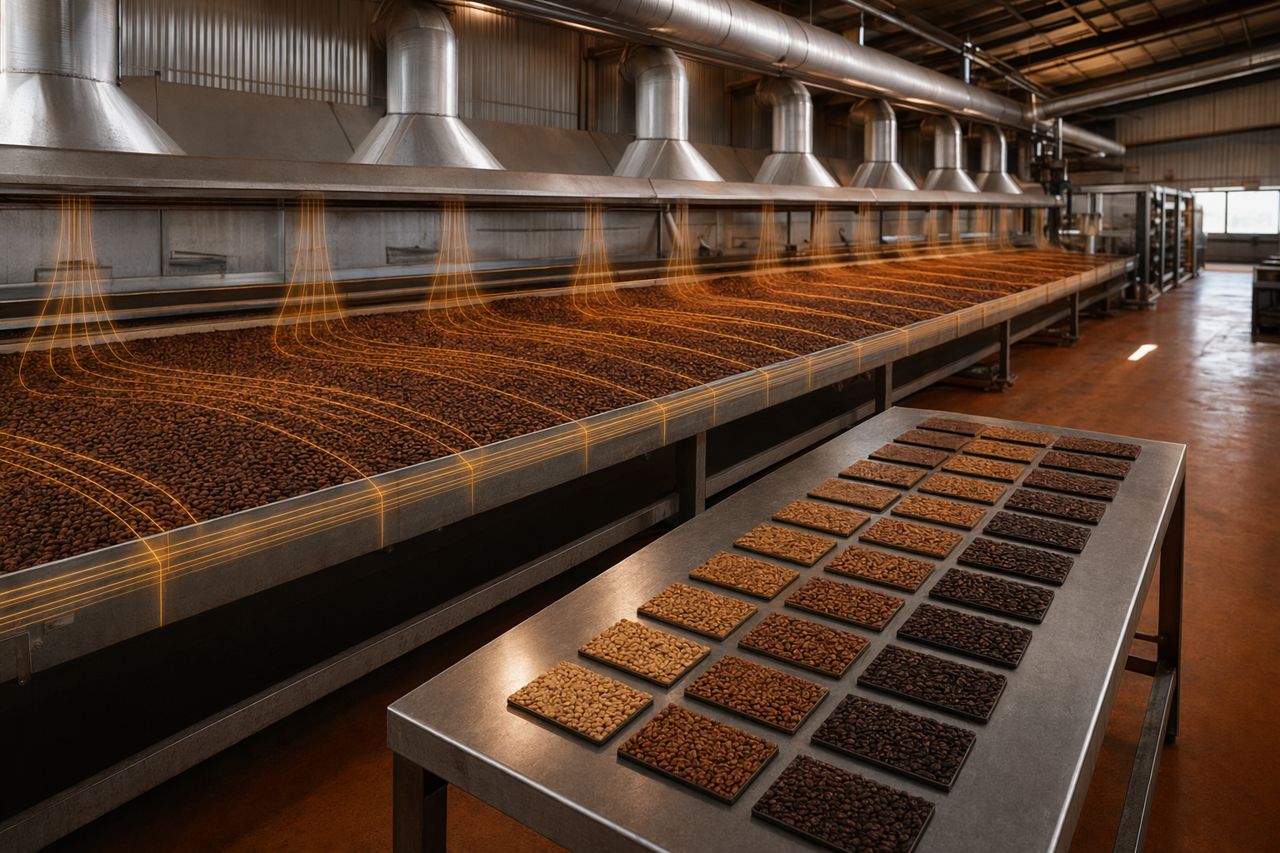
The buyer does not experience the average bean. They experience the range inside the lot. Drying should narrow that range by maintaining even heat exposure, airflow, bed depth, and turning discipline.
When incoming fermented beans vary in pulp residue and moisture behavior, dryers become scheduling bottlenecks. Better upstream control gives production managers a clearer drying window and fewer hold decisions.
For industrial cocoa processors, drying performance is usually improved by disciplined basics rather than dramatic interventions.
Recommended control points include:
The most useful data is not just collected. It is compared batch to batch.
Enzymes are not a drying chemical. They are part of a fermentation-control strategy that influences what the dryer receives.
As an enzyme supplier for cocoa processing, Enzymesbase focuses on enzyme solutions that help factories manage biological variability earlier in the process. The goal is not to standardize cocoa into a flat profile. The goal is to give fermentation managers more repeatable starting conditions so natural cocoa character develops within a controlled operating window.
In drying, that upstream control can support:
The embedded one-minute explainer shows how fermentation data, mucilage condition, and drying curves connect on the factory floor. It is designed for internal technical teams, production managers, and quality leads who need a shared language for controlling the post-fermentation window.
[Embedded faceless explainer video: Industrial Drying After Fermentation]
Use these questions during your next production review:
If the answers are unclear, the drying stage may be absorbing variation that should be controlled earlier.
Cocoa drying is the bridge between biological development and industrial stability. It does not create fermentation quality on its own, but it can preserve it, sharpen it, or weaken it.
Enzymesbase helps cocoa processing factories evaluate where enzyme-supported fermentation can improve downstream repeatability, including the drying stage that protects throughput and quality.
If your factory is reviewing mucilage management, fermentation repeatability, or drying variability, contact Enzymesbase through the on-site request a quote form. Share your process stage, batch size range, and current control challenge, and our team will respond with a practical enzyme-solution discussion for your cocoa line.
Tell us your application and volume — we reply with pricing and lead time.
We have received your message. We will reply by email.