Enzyme programs for cocoa fermentation at pilot and factory scale: mucilage management, drainage, flavor precursor consistency. Wholesale and bulk supply by quote for processors and resellers.
Request pricingSlow-draining lots, wet pockets in the box and cut-test results that spread too wide cost a cocoa factory box space, drying capacity and downgraded beans. Enzymesbase supplies enzyme programs for fermentation managers who need controlled trials, reliable scale-up and factory-ready procurement.
Cocoa fermentation is not a decorative step. It is a conversion window where mucilage behavior, microbial progression, heat rise, acid movement, drainage and cut-test development determine how predictable the rest of the factory can be. Our enzyme programs are selected for processors who want better control over this window while keeping operations practical on the plant floor.
Request a quote for wholesale and bulk supply, trial planning and fermentation process fit. Send the product or problem, the quantity you expect to need and the destination country.
All supply is business-to-business and by quote. Pack format, quantities and delivery terms are quoted per order.
When a cocoa factory moves from bench interest to real fermentation boxes, the buying conversation changes. You need supply continuity, batch documentation, packaging that fits your handling system, and guidance that respects seasonal bean variability.
Enzymesbase supports:
We do not position enzymes as a shortcut around fermentation skill. We supply tools that help experienced processors make batch behavior more repeatable.
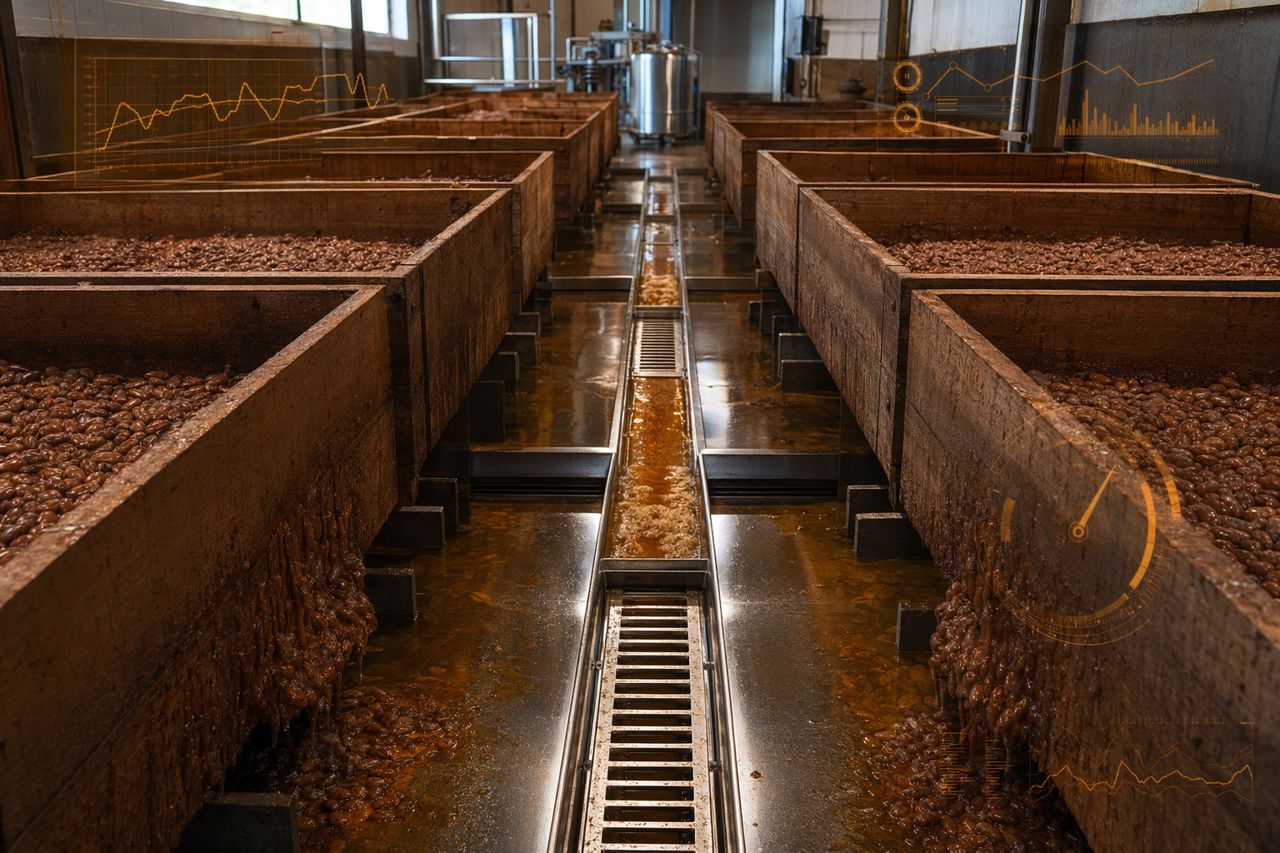
High or uneven mucilage load can slow drainage, distort heat rise, and create inconsistency between the center and edge of a fermentation mass. A targeted enzyme approach can support more predictable mucilage modification, helping operators manage free liquid, airflow, and microbial access more consistently.
Seasonal variation, farm origin, pod maturity, and pulp load all shift fermentation behavior. Enzyme-assisted protocols can help narrow process variation so managers can compare batches with clearer cause-and-effect, rather than reacting to wide swings in drainage or cut-test progression.
The goal is not to force a single flavor profile. It is to support controlled biochemical conditions where flavor precursor formation can proceed more consistently. Better mucilage handling and more stable fermentation movement can help reduce off-track batches and improve confidence in downstream drying and roasting decisions.
Slow, wet, or unpredictable batches occupy fermentation space and complicate scheduling. When enzyme use improves consistency, factories can plan box availability, labor, turning windows, and drying capacity with fewer surprises.
Processors typically evaluate bulk enzyme use against plant-level outcomes such as:
The right enzyme program should make the process easier to manage, not harder to explain.
Bulk enzyme buying for cocoa fermentation requires more than a product name. Enzymesbase helps procurement and production teams define the operating need before quoting.
We review:
This allows us to quote for the way your factory actually runs.
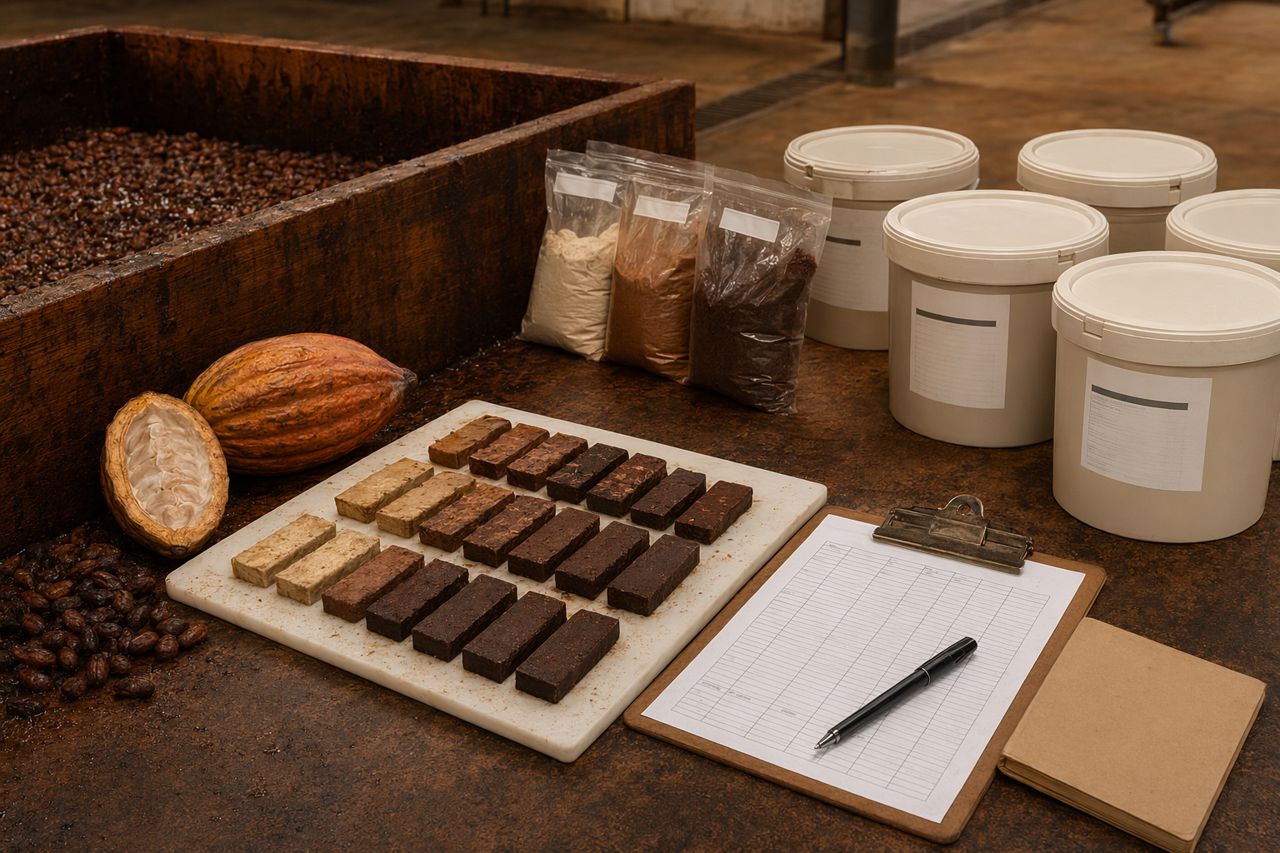
A useful fermentation trial needs clean comparison. We recommend choosing a realistic production problem first: slow drainage, uneven cut-test color, excess pulp variability, box-to-box inconsistency, or scheduling pressure. From there, we help outline a practical trial structure that your team can monitor using its existing plant indicators.
A typical evaluation may compare treated and untreated batches under the same operating conditions, with attention to:
The objective is clear: build enough plant-floor evidence to decide whether bulk enzyme use improves control, consistency, and scheduling value.
Enzymesbase speaks the language of fermentation rooms, not catalog pages. We understand that cocoa processors need ingredient supply that can be discussed with operations, QA, purchasing, and senior production leadership in the same conversation.
As an enzyme supplier for cocoa processing, we focus on:
Our role is to help your team make enzyme use measurable, manageable, and commercially sensible.
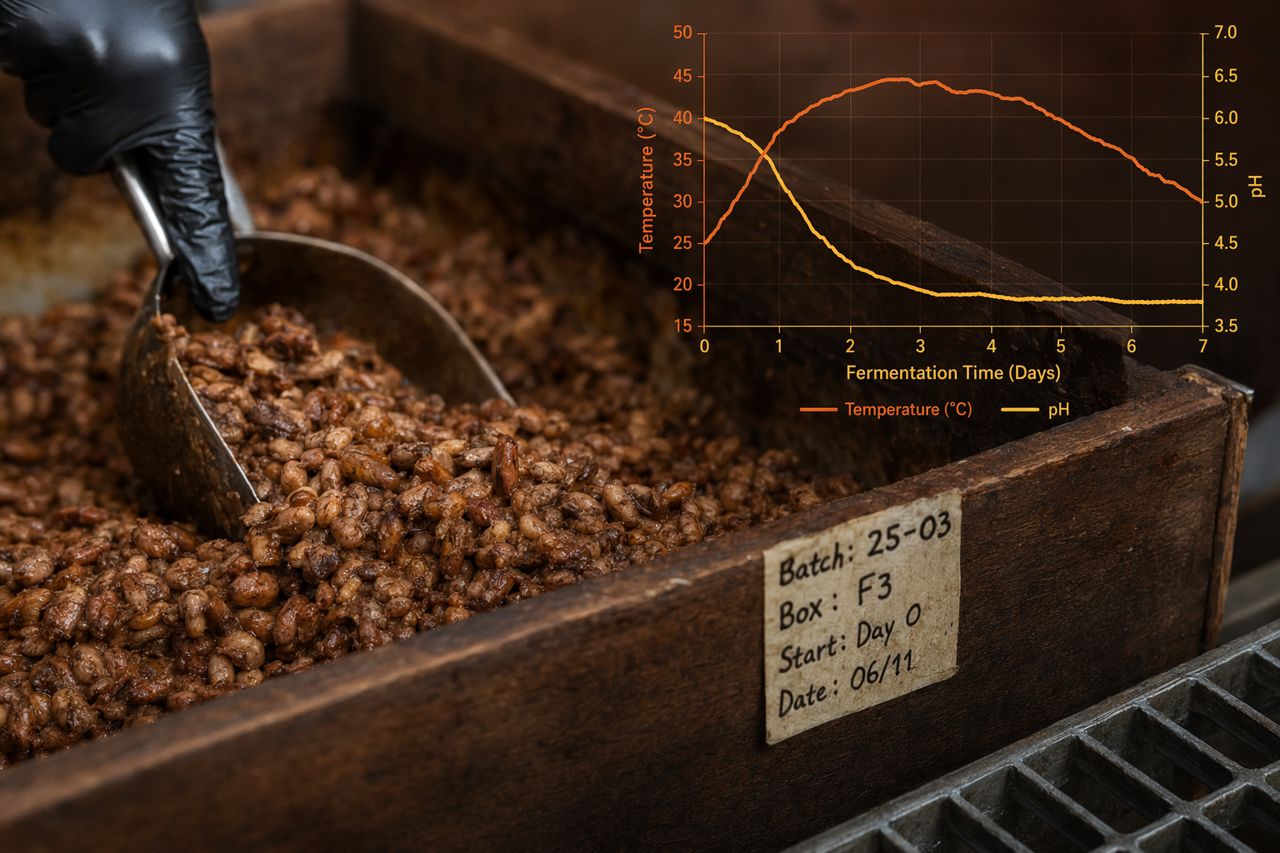
A short, faceless process explainer appears on this page to show how enzyme-assisted cocoa fermentation can support mucilage management, process repeatability, and factory-scale decision making. The visual style follows cacao beans turning through wooden boxes, amber mucilage changing texture, and temperature and pH curves resolving into clean batch-control data.
Wholesale and bulk supply for manufacturers, processors and resellers. To get a quote, send:
| What to send | Why it matters |
|---|---|
| Product or problem (for example slow drainage, sticky pulp, uneven cut tests) | Lets us match the enzyme pathway to the fault |
| Quantity: trial lot, season or annual volume | Decides whether we quote a trial or repeat supply |
| Destination country | Needed for the delivery quote |
| Fermentation format and approximate batch size | Helps us plan the trial and the dosing workflow |
Enzymesbase will respond with a practical supply recommendation, quote structure and next-step questions for your fermentation team.
Tell us your application and volume — we reply with pricing and lead time.
We have received your message. We will reply by email.