Fix slow pulp breakdown, uneven drainage, delayed heat rise and wide cut-test spread in cocoa fermentation. Enzyme programs and wholesale supply by quote for processors and resellers.
Request pricingIn cocoa fermentation, inconsistency rarely starts as a flavor problem. It starts as a control problem: pulp stays too viscous, drainage lags, box mass remains uneven, heat rise arrives late, and cut-test results spread wider than the production team can accept.
Enzymesbase supplies enzyme programs for cocoa processors, exporters running central fermentaries and the distributors who serve them, when they need a practical corrective lever inside real factory conditions, not a theoretical fermentation model. We help fermentation managers judge where enzymatic mucilage breakdown can improve drainage, aeration, heat development, precursor formation and batch-to-batch repeatability, and we quote wholesale supply once a trial proves the fit.
Request a quote for your cocoa fermentation line
Wholesale and bulk supply, by quote. Send the symptom you are fighting, the quantity you expect to need (trial lot or season) and the destination country. Pack format and quantities are quoted per order.
Most troubleshooting conversations begin with one or more of these plant-floor symptoms:
These are not just fermentation observations. They affect factory scheduling, dryer loading, quality grading, supplier confidence, and the reliability of downstream roasting behavior.
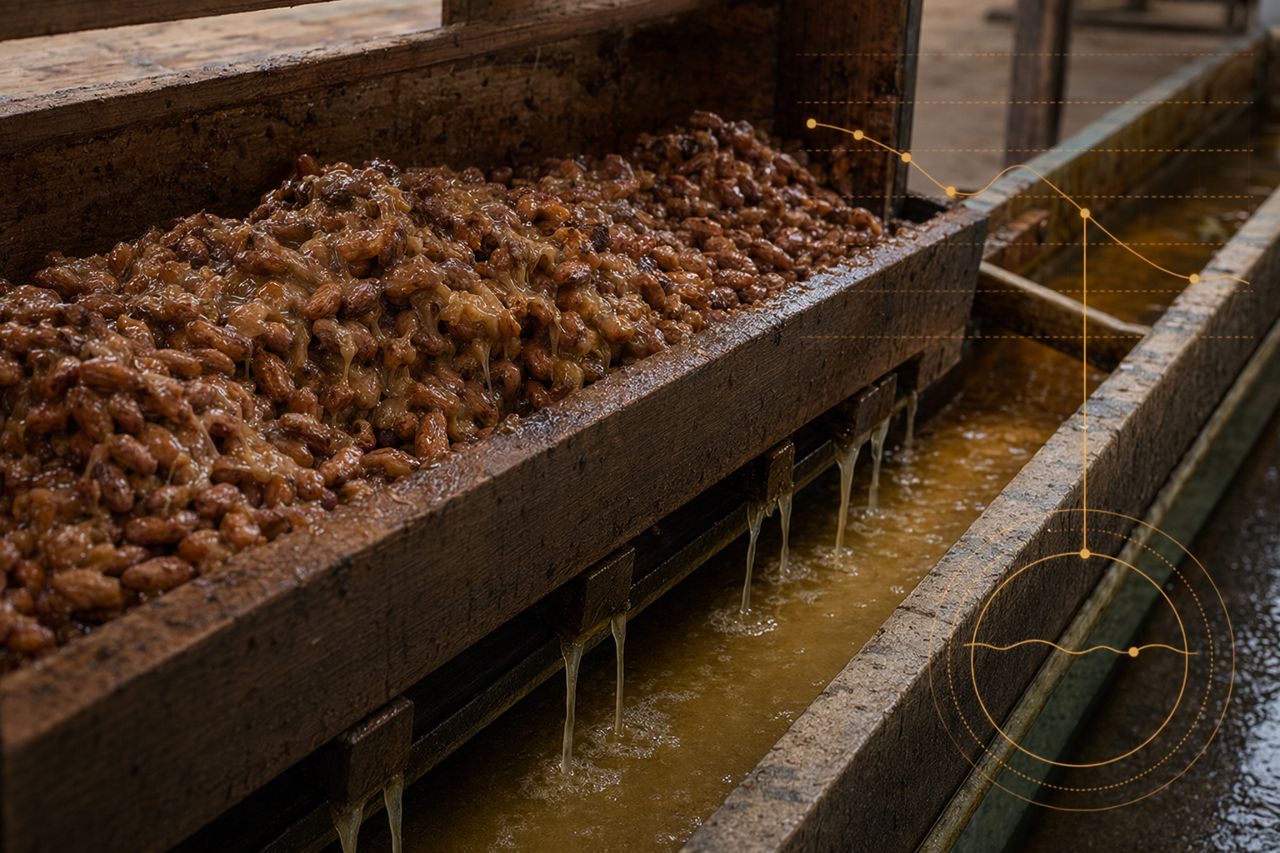
Cocoa pulp is not passive material. Its viscosity, sugar release behavior, and breakdown rate influence how liquid drains, how oxygen enters after turning, and how the microbial sequence develops across the fermentation mass.
When mucilage breakdown is too slow or uneven, the process can become difficult to steer:
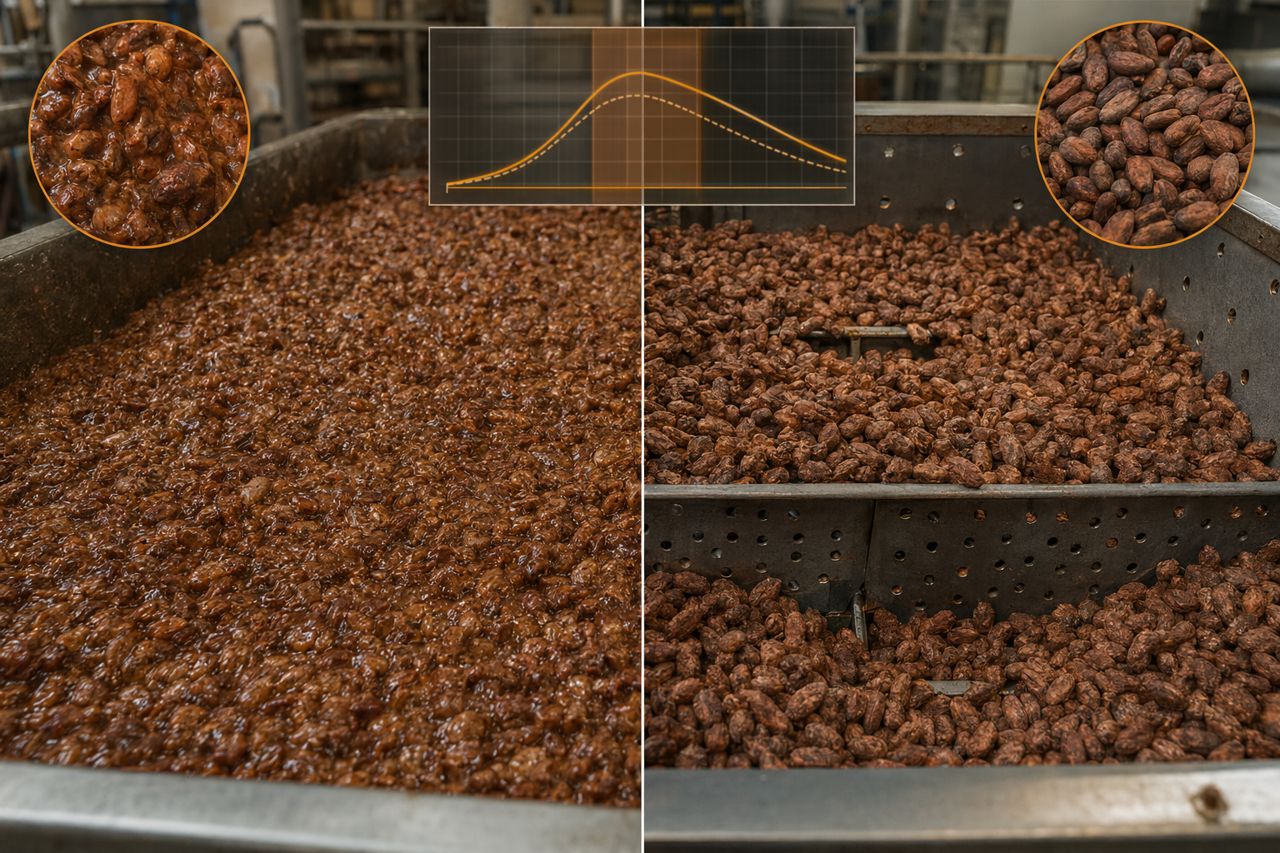
A targeted enzyme approach can support more predictable pulp reduction and liquid release, giving the fermentation manager a clearer control window.
As an enzyme supplier for cocoa processing, Enzymesbase does not begin with a generic product push. We begin with the operating reality of your plant.
This allows us to recommend an enzyme strategy that fits the way your factory already runs.
When pulp remains heavy and sticky, the mass can hold liquid longer than planned. Enzymesbase can recommend enzyme systems designed to support mucilage breakdown, improve flow, and reduce the operational uncertainty caused by wet, dense batches.
Buyer value: better drainage predictability, easier box handling, and fewer decisions made under unclear pulp conditions.
If one box drains cleanly while another holds liquid, managers may face inconsistent heat curves and staggered quality decisions. Enzyme-supported pulp management can help normalize liquid release when raw material variation is part of the challenge.
Buyer value: tighter batch comparability and more dependable fermentation scheduling.
Heat rise depends on more than pulp breakdown, but excessive liquid retention can slow the physical and biological conditions needed for a controlled temperature profile. By improving pulp reduction and drainage behavior, enzymes can support a more reliable environment for heat development.
Buyer value: stronger process repeatability without rebuilding the fermentation area.
When color development varies across the same batch, the cause may include uneven aeration, inconsistent thermal exposure, or localized pulp retention. A structured enzyme trial can help determine whether mucilage management is a limiting factor.
Buyer value: clearer root-cause evidence before making larger capital or sourcing changes.
Peak supply often exposes every weakness in fermentation control. Extra holding time, uncertain batch release, or overloaded drainage zones can restrict daily flow. Enzymes can be evaluated as a low-disruption tool for improving process stability under higher load.
Buyer value: improved line confidence when volume rises and decision windows shrink.
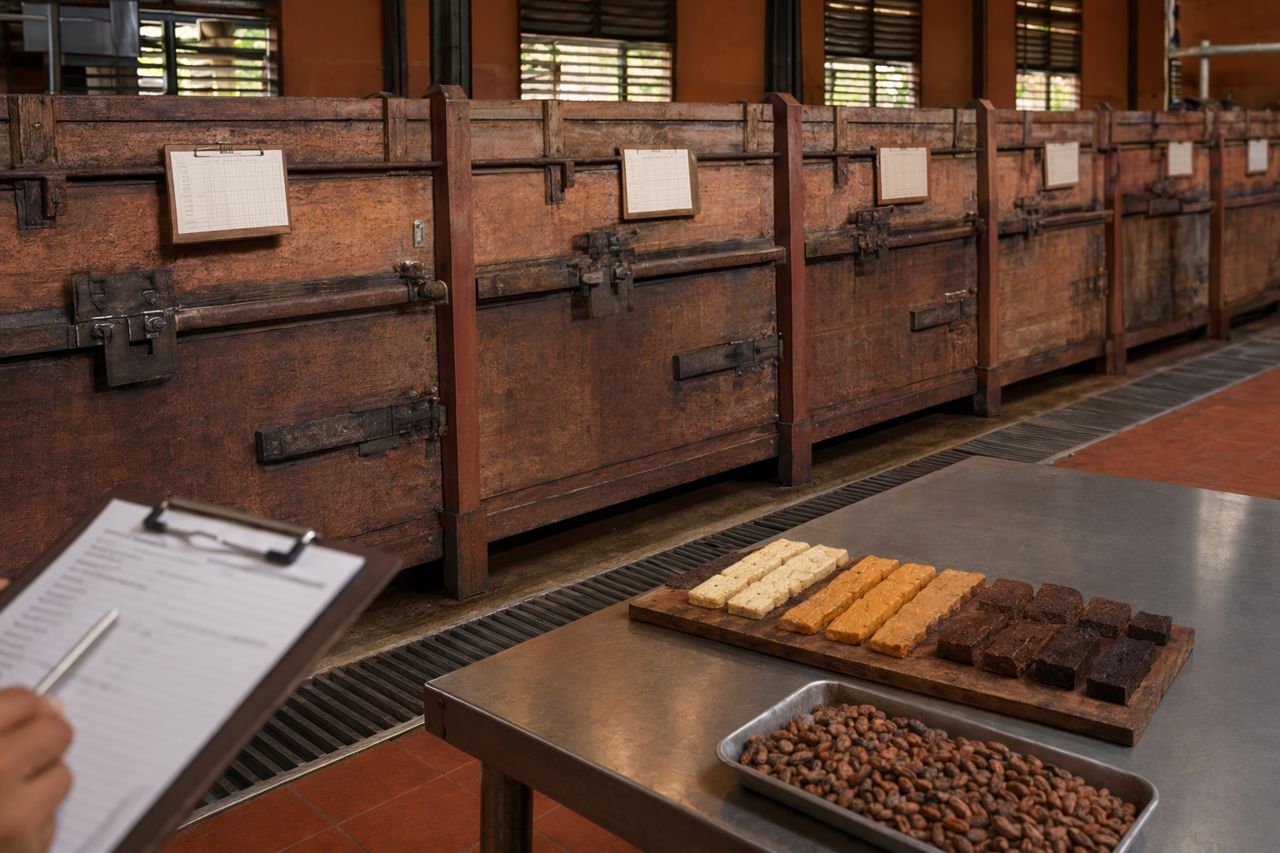
Enzymesbase structures trials around factory evidence, not lab-perfect assumptions.
A typical evaluation plan may include:
The goal is not to add complexity. The goal is to give your team a repeatable lever where pulp and drainage variability are creating downstream uncertainty.
Enzymesbase communicates in plant-floor terms because cocoa fermentation is not controlled from a brochure. It is controlled with boxes, timing, drainage, operators, climate, harvest variation, and quality pressure.
Our enzyme recommendations are designed to work within those constraints:
When you request pricing, we can prepare a recommendation based on:
If your team is comparing suppliers, Enzymesbase can provide a focused technical quote that explains what the enzyme solution is intended to correct and how it should be evaluated in production.
If inconsistent pulp breakdown, drainage, or heat rise is limiting fermentation control, Enzymesbase can help you evaluate an enzyme path with practical trial logic.
Use the on-site request a quote form below and include the product or symptom, the quantity you expect to need, the destination country, your fermentation format and batch size range, and the target outcome. We supply manufacturers, processors and resellers, and we will review the process context and respond with a recommended next step and a quote.
Request a quote from Enzymesbase — an enzyme supplier for cocoa processing focused on repeatable fermentation control.
Tell us your application and volume — we reply with pricing and lead time.
We have received your message. We will reply by email.