How enzymes support cocoa flavor precursor development in fermentation: protease, pectinase and carbohydrase programs, trial design, and wholesale supply by quote for processors and resellers.
Request pricingFor cocoa processors, flavor is not a marketing adjective. It is a controlled outcome built from pulp breakdown, bean acidification, microbial momentum, protein modification, carbohydrate conversion, drying discipline, and repeatable handoff between teams.
Enzymesbase supports plants evaluating enzyme-assisted processing as a practical way to improve fermentation control and flavor precursor availability. We focus on factory-ready decisions: where an enzyme can help, what operating conditions matter, and how to trial without disrupting commercial throughput.
Wholesale and bulk supply, by quote, for cocoa processors, chocolate and cocoa-ingredient manufacturers and resellers. Send the product or quality goal, the quantity you expect to need and the destination country.
Roasting expresses cocoa character, but it does not create the full precursor base on its own. During fermentation and early post-fermentation handling, proteins and carbohydrates are transformed into compounds that influence later aroma formation, color development, acidity balance, bitterness perception, and cut-test progression.
When fermentation is uneven, the downstream plant feels it:
Enzyme-assisted processing is not a shortcut around fermentation skill. It is a control tool for processors who want tighter batch behavior and clearer process windows.
Cocoa fermentation is a living system. The goal is not to overwhelm it, but to support specific transformations that influence consistency and downstream flavor potential.
Targeted protease solutions may support the controlled breakdown of cocoa seed proteins into smaller peptides and amino acid precursors. These compounds are important contributors to Maillard chemistry during roasting.
For processors, the value is not theoretical chemistry. It is the possibility of more predictable roast response, cleaner flavor development, and reduced dependence on corrective blending.
Carbohydrate-active enzymes may help modify pulp and bean-associated carbohydrates in ways that support microbial access, acid movement, and precursor development. In practical terms, this can influence how consistently a batch moves from wet mass to fermented bean.
This is especially relevant when fruit maturity, pulp load, weather, or box loading patterns create variability.
Excess or inconsistent mucilage can slow drainage, create uneven aeration, and complicate temperature development. Enzymes selected for pectin-rich pulp structures may help reduce viscosity and improve the physical behavior of the fermenting mass.
Operational benefits may include:
We work with fermentation managers, production leads, quality teams, and technical buyers who need more than a product name. They need to know whether enzyme-assisted processing fits their crop conditions, plant layout, and commercial targets.
Before recommending an approach, we help clarify:
The right enzyme approach depends on the whole process, not only the ingredient.
Enzyme-assisted flavor development programs are most useful when tied to measurable plant-floor priorities.
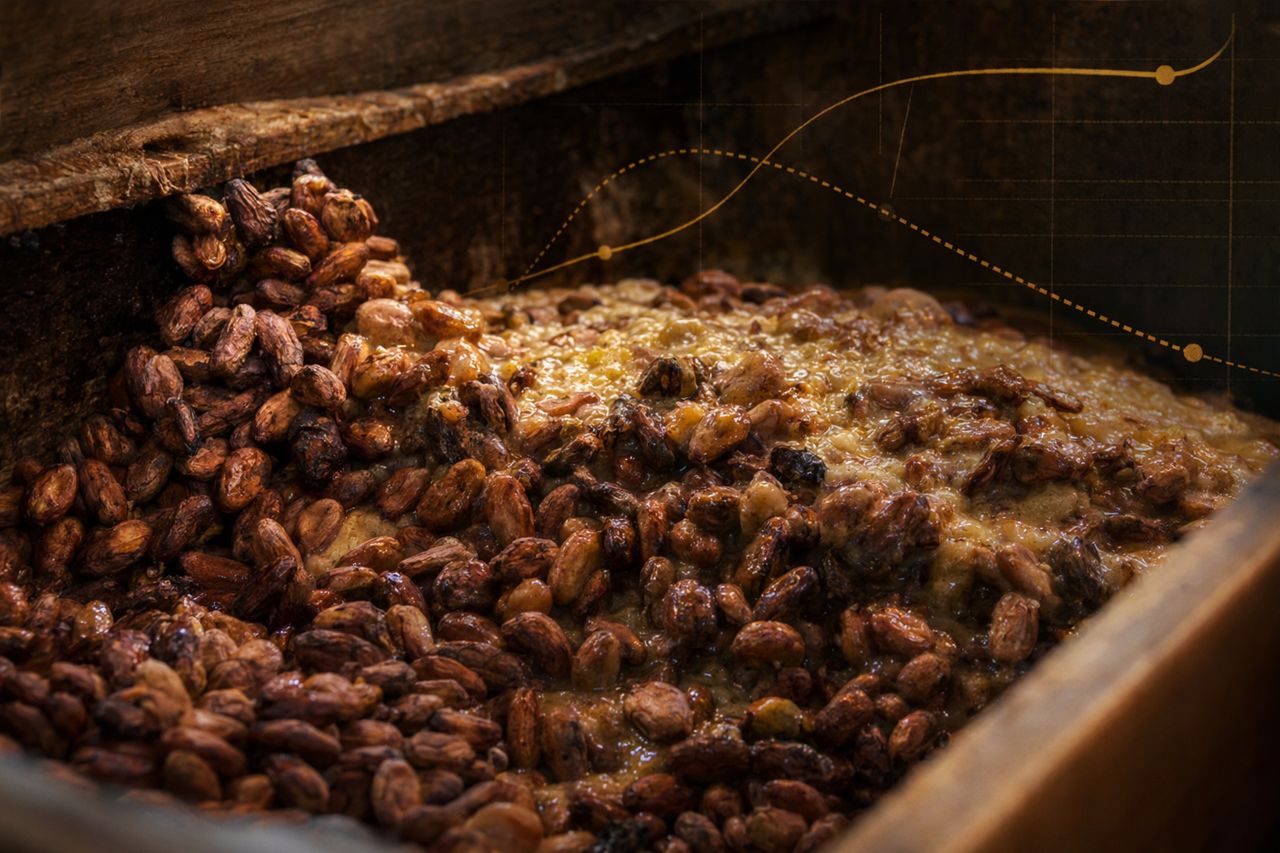
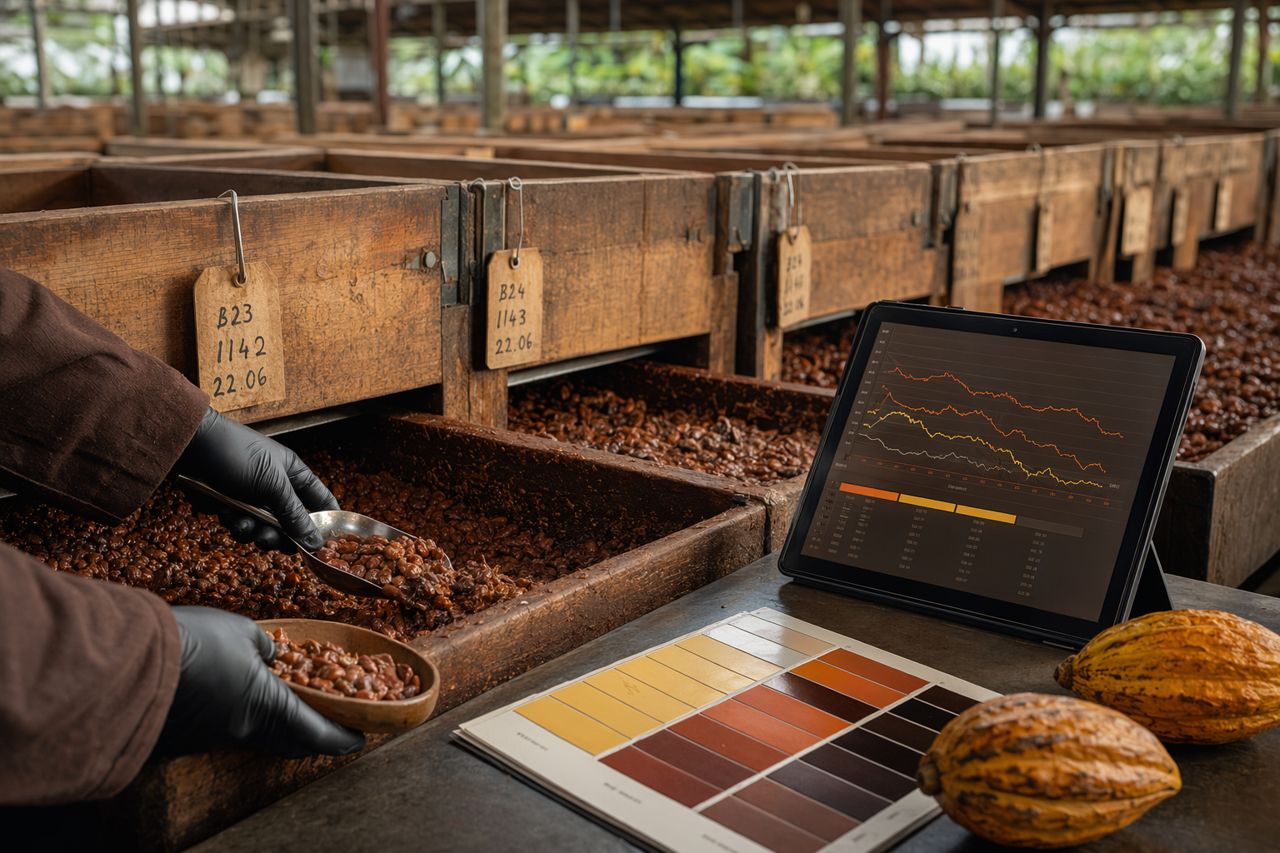
Processors can evaluate whether enzymes help reduce batch variability in temperature rise, pulp breakdown, bean color transition, and acid movement. More stable curves make quality decisions less reactive.
By supporting protein and carbohydrate modification during controlled processing, enzymes may help prepare beans for more consistent roasting behavior and aroma development.
Reduced pulp viscosity or improved breakdown can support drainage, aeration, and turning efficiency. This matters in facilities where wet-season pulp load affects throughput.
When fermentation quality is more consistent, processors may reduce the need to compensate for uneven lots after drying or roasting.
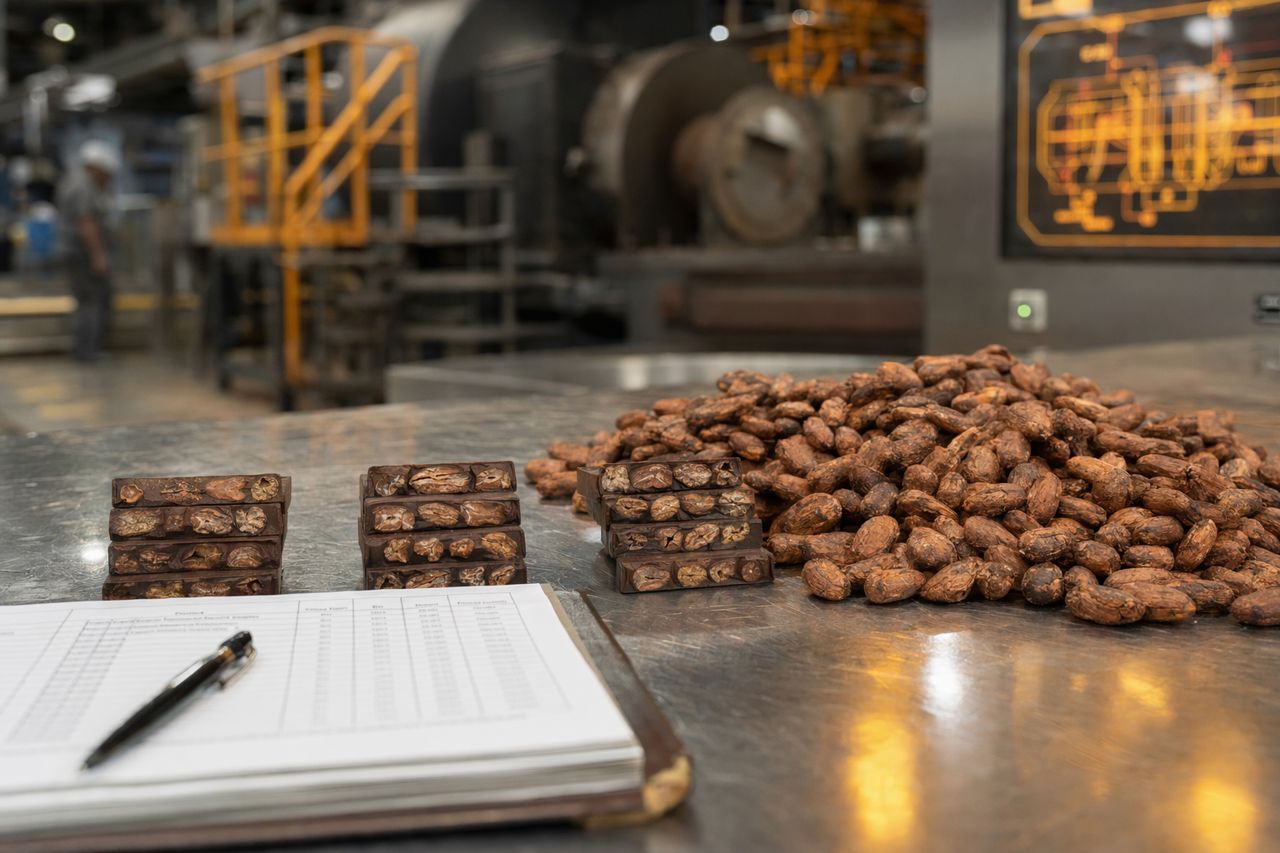
A structured enzyme trial gives quality and production teams clearer evidence: batch observations, cut-test movement, liquor sensory direction, drying behavior, and roast response.
Enzymesbase can help evaluate enzyme solutions across several functional categories. Final selection depends on the plant’s process conditions and commercial objective.
Used to support controlled protein breakdown and precursor availability. Relevant for processors targeting roast response, flavor depth, and batch-to-batch sensory consistency.
Used to support mucilage structure modification and pulp breakdown. Relevant for drainage, mass handling, fermentation uniformity, and wet-season variability.
Used to support carbohydrate transformation in the pulp-bean system. Relevant for fermentation balance, microbial accessibility, and process consistency.
Some factories may benefit from a balanced blend rather than a single enzyme function. Blend design should be based on fermentation format, pulp condition, and quality objective.
A useful trial does not need to disrupt production. It needs defined controls, clear observation points, and agreement between production and quality teams.
Start with the issue that matters commercially. Examples include slow pulp breakdown, uneven box temperatures, inconsistent cut-test results, weak roast response, high acidity variance, or excessive corrective blending.
Use comparable fresh bean lots where possible. Keep box loading, turning schedule, drainage approach, and drying conditions as consistent as the plant allows.
Useful indicators may include:
A side-by-side control helps separate enzyme effect from crop variability, weather, operator handling, or fermentation box differences.
The best outcome is not simply “more reaction.” It is a repeatable process benefit that supports quality, throughput, and cost control.
Enzymesbase is designed for cocoa processing teams who need calm, practical technical support. We do not position enzymes as magic. We position them as controllable inputs within a fermentation and post-harvest system.
You can expect:
This page is relevant if your facility is trying to:
Tell us the product or the quality outcome you want to improve, the quantity you expect to need, the destination country, and your current fermentation format and batch size. Enzymesbase will review your application and reply with an enzyme approach suited to your plant conditions and a quote.
Tell us your application and volume — we reply with pricing and lead time.
We have received your message. We will reply by email.