Practical fermentation box design guidance for cocoa factories seeking tighter bean mass turnover, mucilage management, temperature control, and repeatable flavor precursor development.
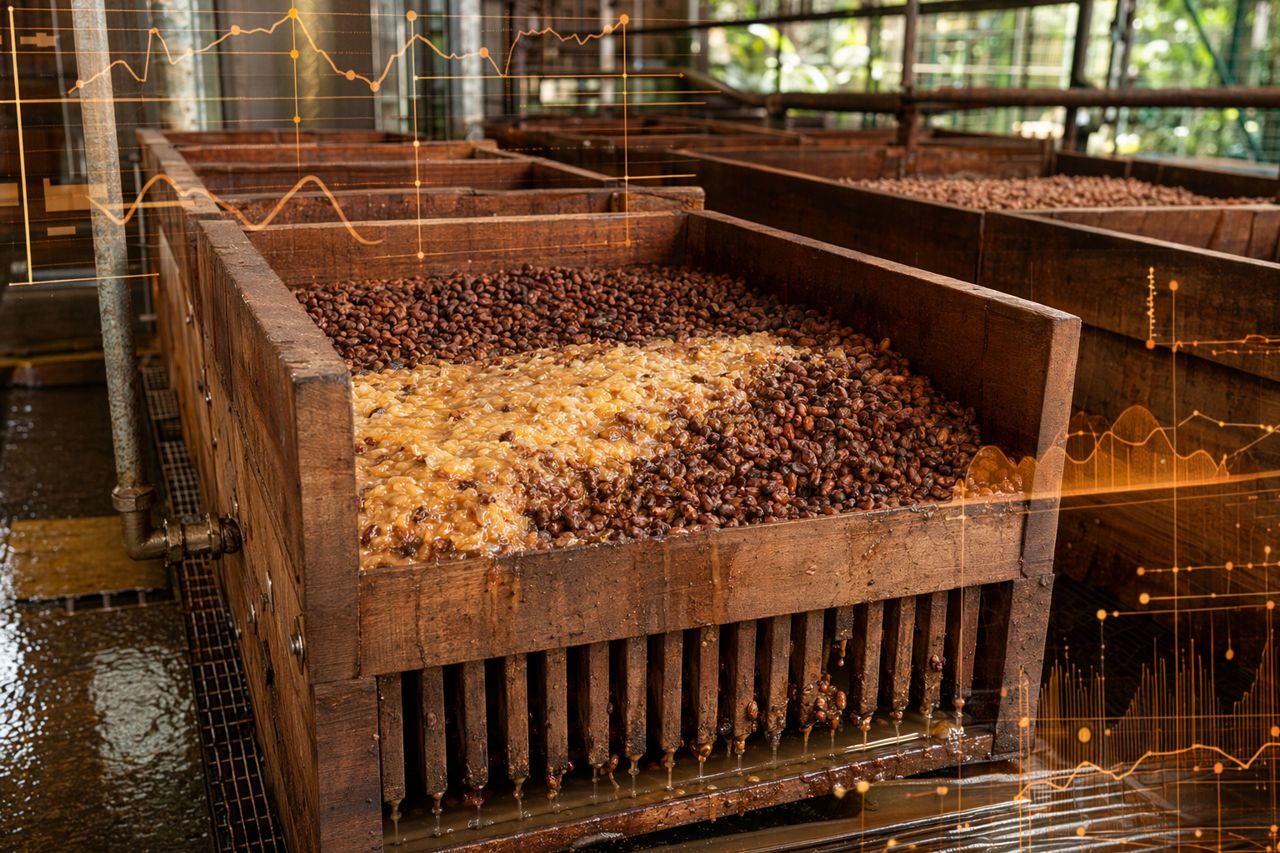
Request pricingFor a cocoa processing factory, fermentation box design is not a carpentry detail. It is a control point. Box geometry, drainage, fill depth, airflow, turning access, and unloading sequence all influence how evenly the bean mass heats, how mucilage breaks down, and how predictably flavor precursors develop before drying.
Enzymesbase supports factories that need repeatable fermentation performance at production scale. As an enzyme supplier for cocoa processing, we look at the box as part of the biochemical system: pulp viscosity, liquid release, microbial momentum, oxygen exposure, temperature rise, pH movement, and bean-to-bean contact. Good box design gives operators a more stable process window. Poor box design forces them to correct the same problems batch after batch.
For cocoa processors, exporters and resellers: Enzymesbase supplies enzyme programs for fermentation lines, wholesale and by quote. Request a quote with the product or problem, the quantity you expect to need and the destination country.
Cocoa fermentation is a moving heat and mass-transfer event. The bean mass generates heat, releases liquid, shifts in acidity, and changes texture as pulp and mucilage are transformed. If the box cannot manage those changes, the factory sees wider variation in:
A box that is too deep can trap heat and produce uneven zones. A box that drains poorly can leave pockets of excess liquid. A box that is difficult to turn encourages partial turnover rather than full mass mixing. Each issue becomes a process repeatability problem.
Fill depth controls the balance between heat retention and turnover access. A shallow mass may struggle to maintain fermentation heat in cooler conditions. An overly deep mass may develop hot cores, slow oxygen movement, and uneven pulp breakdown.
For production teams, the practical question is not simply how many kilograms fit in a box. The better question is how consistently that mass can be turned, drained, monitored, and unloaded without creating dead zones.
Box geometry should support:
When factories standardize fill height rather than filling by visual habit, fermentation data becomes easier to compare across lots and seasons.
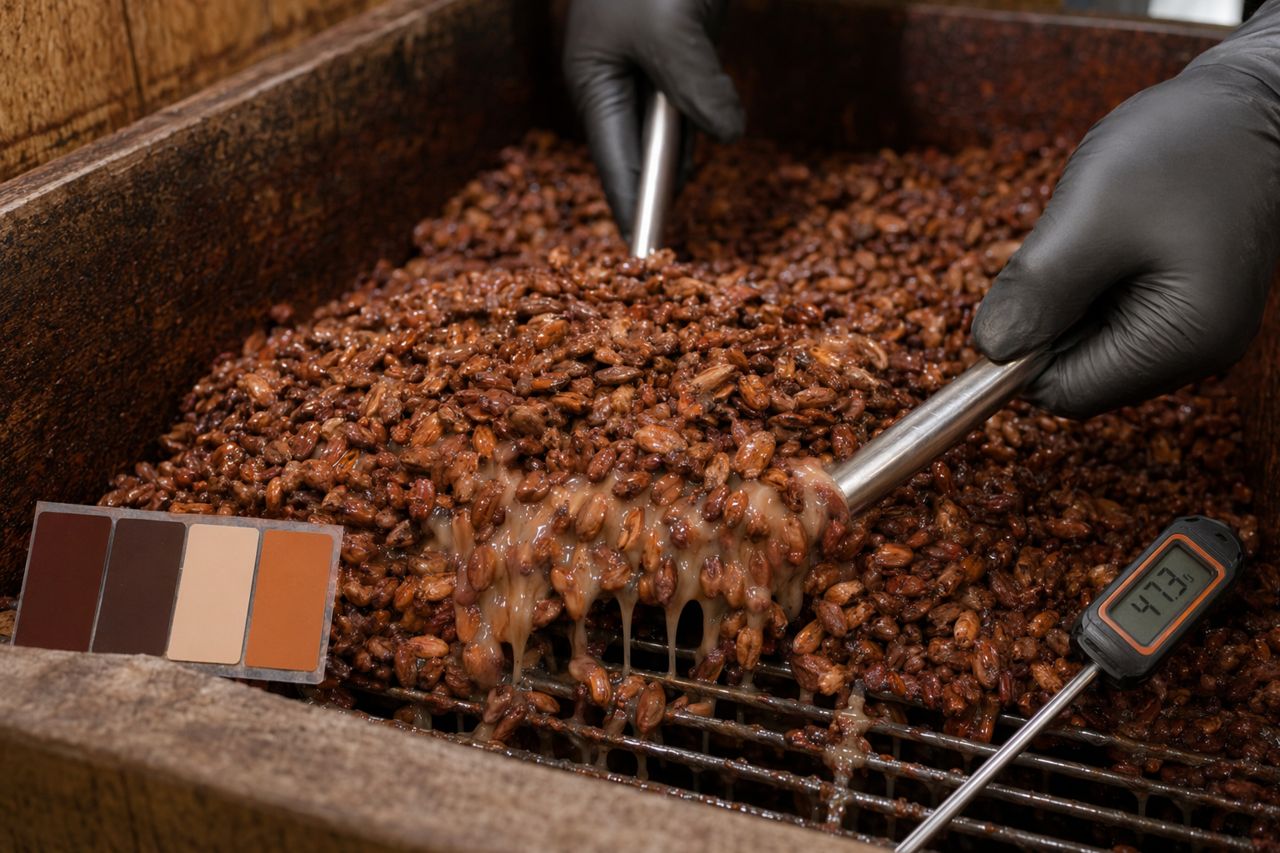
Mucilage management is one of the main reasons box design matters. Early fermentation releases liquid as pulp structure breaks down. If drainage is restricted, retained liquid can slow oxygen movement and create local process variation. If drainage is too aggressive or uncontrolled, the mass may lose heat and moisture balance faster than operators expect.
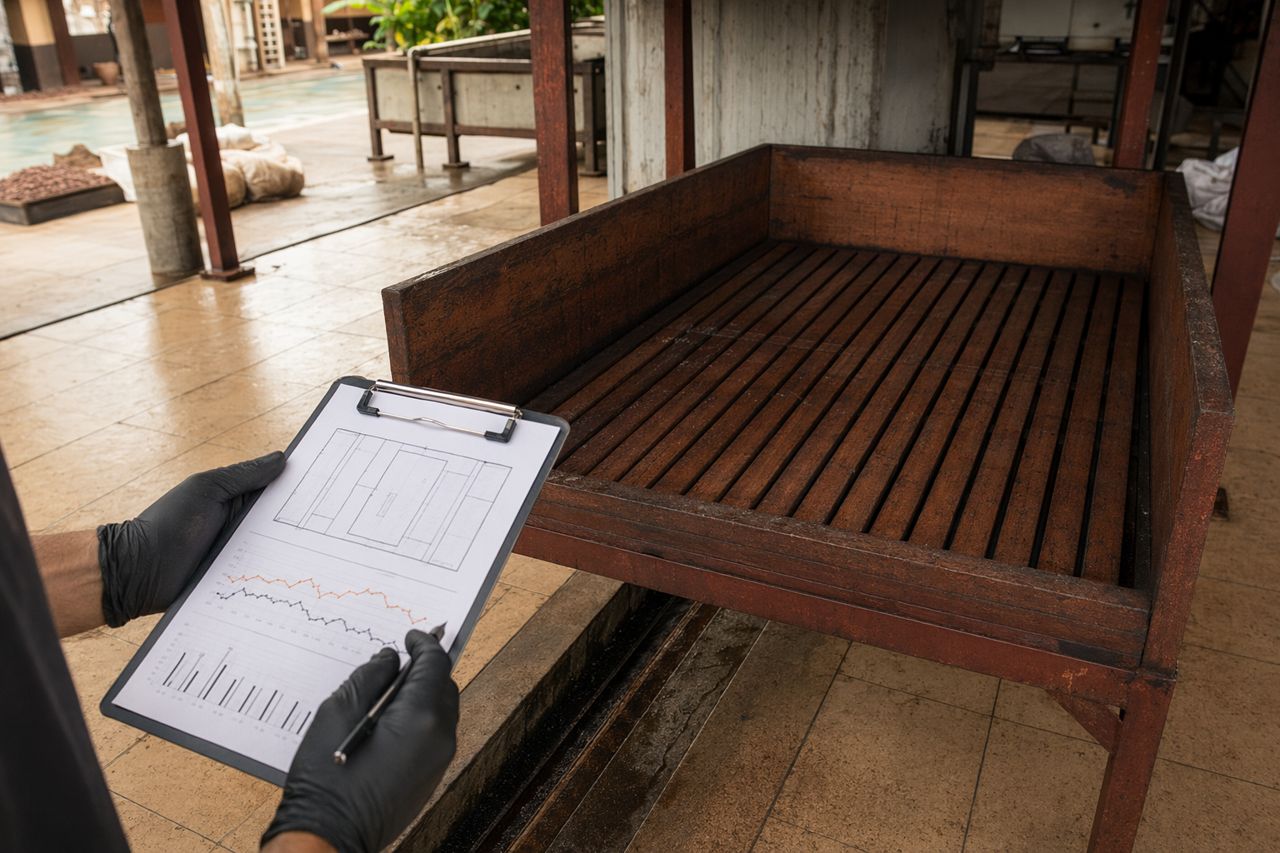
Effective drainage design usually includes:
The target is not maximum drainage at any cost. The target is predictable drainage that supports the fermentation curve and reduces wet spots in the bean mass.
Turning is where box design meets operator behavior. If a box is hard to turn, turnover quality becomes dependent on the strongest person on the floor or the least crowded shift. That is not a scalable control strategy.
A fermentation box should allow the team to move the full mass, not just the top and side layers. Wide access, safe working height, and clean transfer routes between boxes help reduce partial mixing. Where stepwise box transfer is used, each transfer should create a true inversion and redistribution of the mass.
Good turnover design helps stabilize:
For factories pursuing tighter specifications, turnover records should be paired with temperature and pH observations. The box should make those observations easier, not more disruptive.
Enzyme-assisted cocoa fermentation is not a substitute for box control. It is most effective when the physical system can handle the change in pulp behavior. When mucilage breakdown becomes more predictable, the box still has to drain consistently, maintain suitable heat, and allow full turnover.
Enzymesbase evaluates enzyme use alongside the factory layout because the same formulation can behave differently in boxes with different depths, drainage patterns, and turning routines. A practical enzyme program should help the plant improve process repeatability, not create another variable for operators to chase.
Typical factory objectives include:
As an enzyme supplier for cocoa processing, Enzymesbase focuses on the operating conditions that determine whether those outcomes are realistic: raw material variation, box design, batch size, temperature behavior, and the plant team’s actual turnover routine.
Use this checklist before changing box dimensions, adding new boxes, or adjusting enzyme-assisted processing.
Fermentation managers often recognize the same symptoms before the root cause is named:
These are not always enzyme problems, raw material problems, or operator problems. Often they are system-design problems. The box may be limiting the plant’s ability to run a repeatable fermentation curve.
When Enzymesbase discusses fermentation improvement with a cocoa factory, we prefer to start with the process map rather than a generic product recommendation. The useful questions are specific:
From there, enzyme selection and usage guidance can be aligned with the box reality. The result is a more practical program: easier mucilage management, clearer operator targets, and better batch-to-batch comparability.
A fermentation box is productive only if it helps the factory run controlled batches. More capacity inside the same footprint may look efficient, but it can reduce control if fill depth, drainage, and turnover suffer.
The strongest designs make good operating behavior easier. They let the team load consistently, turn thoroughly, drain predictably, measure repeatably, and connect fermentation outcomes to real process variables.
If your factory is redesigning fermentation boxes, troubleshooting inconsistent turnover, or preparing to evaluate enzyme-assisted mucilage management, Enzymesbase can help you frame the control points before you commit to a production change.
Tell us the product or problem, the quantity you expect to need and the destination country, plus your bean mass, box layout, fermentation targets and current bottlenecks. Enzymesbase will review the process context and reply with a practical enzyme recommendation and a quote.
Tell us your application and volume — we reply with pricing and lead time.
We have received your message. We will reply by email.