A practical guide for cocoa fermentation teams on mucilage breakdown, batch variability, flavor precursor development, and where enzyme support can improve repeatability.
Request pricingIn a cocoa processing factory, inconsistent fermentation rarely comes from one variable. It is usually the result of mucilage load, pod maturity, box filling, turning rhythm, drainage, microbial momentum, and heat release moving out of sync.
The result is familiar on the plant floor: one lot runs hot and sharp, another lot stays pale and slow, and both create downstream uncertainty for drying, roasting, liquor quality, and customer specifications.
Enzymesbase is an enzyme supplier for cocoa processing focused on helping fermentation teams manage that variability with practical, batch-aware enzyme solutions. The goal is not to make cocoa fermentation artificial. The goal is to make the natural process more repeatable.
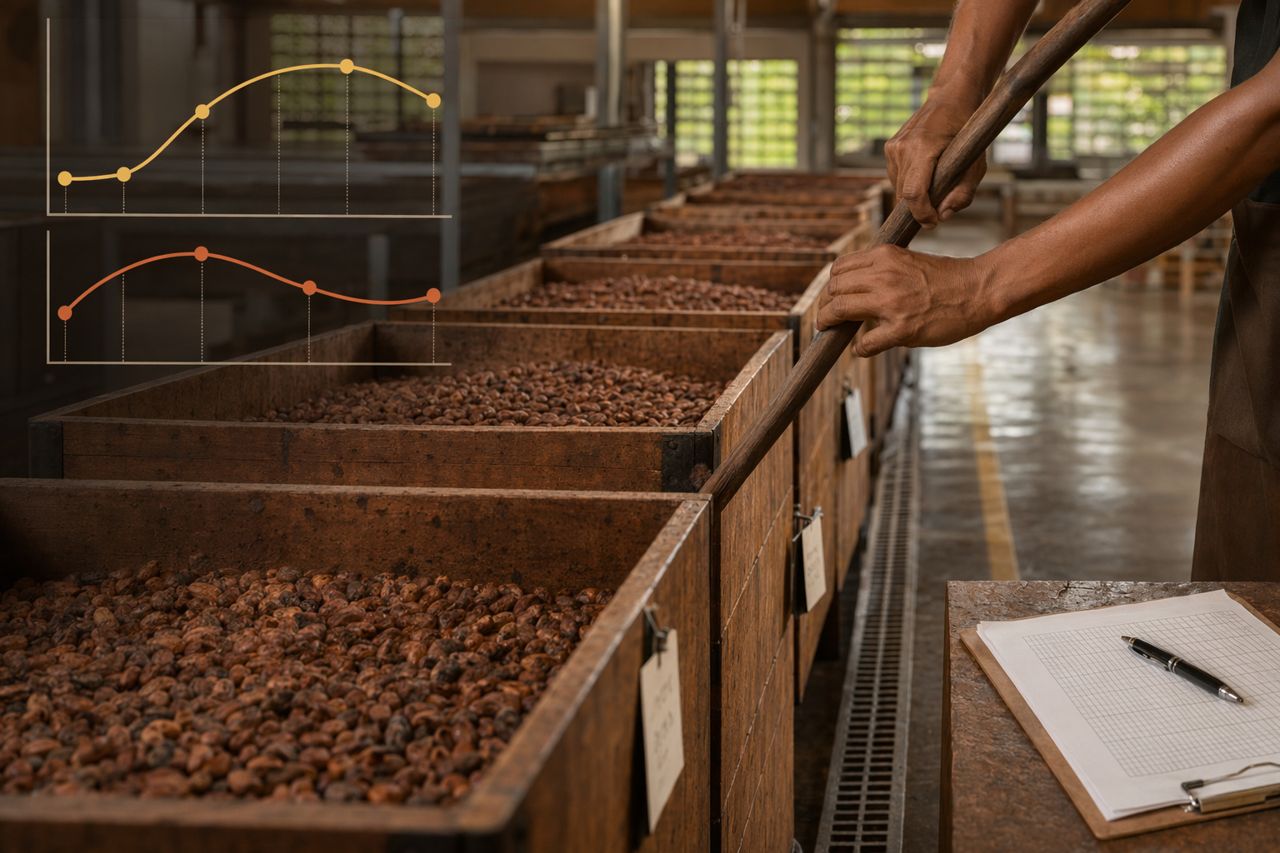
Two cocoa lots can enter the same fermentation line and behave very differently.
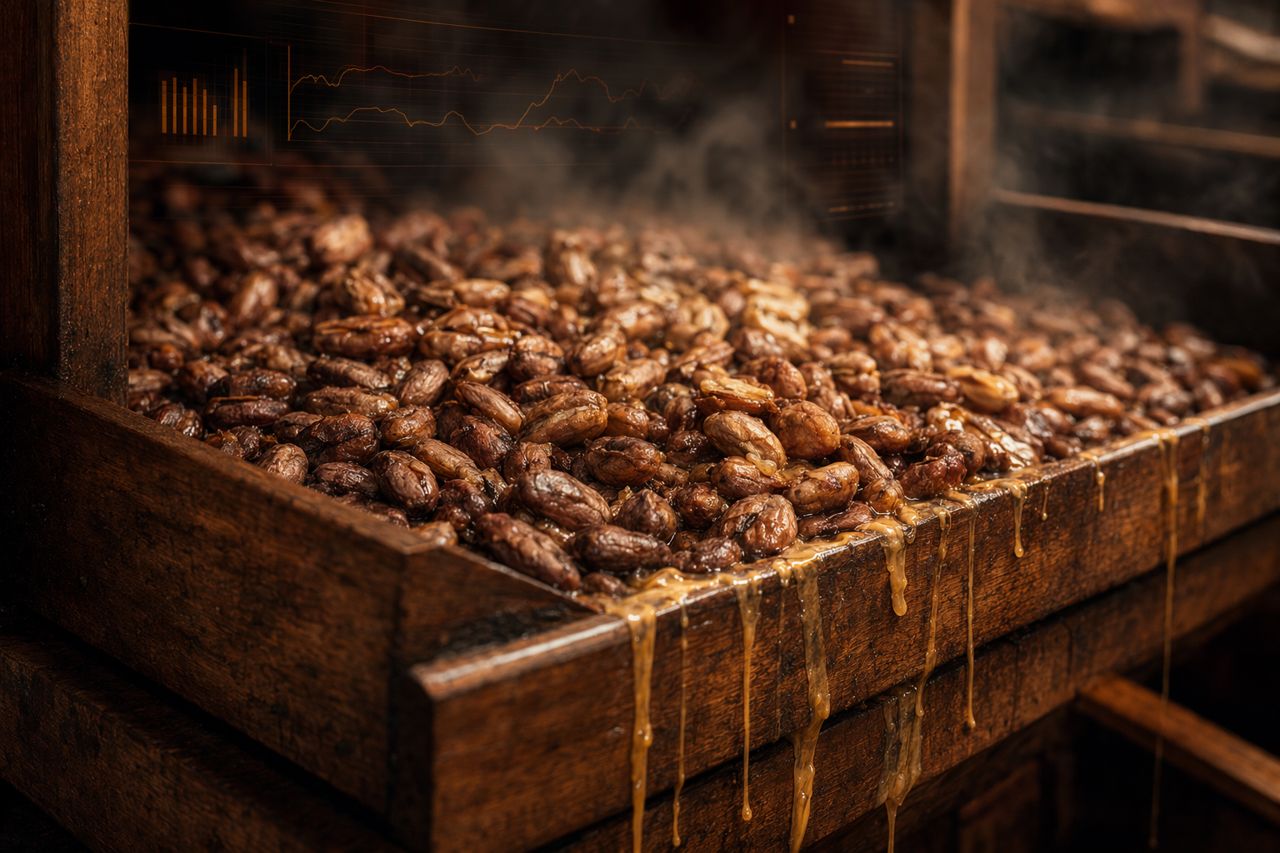
One may show rapid pulp liquefaction, aggressive temperature rise, fast acid movement, and darkening cotyledons ahead of schedule. Another may hold thick mucilage longer than expected, drain slowly, heat unevenly, and remain under-developed even after the normal residence time.
For fermentation managers, that gap affects:
A fermentation system that cannot repeat itself creates risk long before the beans reach the roaster.
Over-fermentation is often described as “too long in the box,” but time is only part of the story. A lot can over-ferment because the biochemical and microbial phases are moving faster than the schedule assumes.
Common plant-floor drivers include:
Fresh pulp with high available sugars can push microbial activity quickly. If drainage and turning do not match the pace, heat and acidification can accelerate, especially in larger boxes or compacted masses.
Dense loading, poor aeration paths, or delayed turning can create hot zones. The outside of the mass may appear manageable while the center is already moving into excessive acid diffusion and tissue breakdown.
Rapid mucilage liquefaction can be useful, but if it occurs unevenly or too early without coordinated turning and drainage, the lot may shift from active fermentation into degradation before operators see it in a routine check.
Mixing pod maturities, origin blocks, or harvest intervals can hide fast-moving fractions inside an otherwise normal batch. By the time the lot is evaluated, part of the mass has already moved beyond the desired development window.
Under-fermentation is not simply a lack of time. It often reflects poor access: microbial access to pulp, oxygen access during turning, and acid movement into the bean at the right pace.
Typical causes include:
Some lots hold pulp structure longer. When mucilage does not break down predictably, drainage slows, heat distribution becomes uneven, and the fermentation curve can flatten.
Weather, pod handling, sanitation practices, and harvest delays can change the starting ecology. If the early phase is sluggish, the whole batch may fall behind even when the factory follows the usual schedule.
Turning is not just mixing. It resets oxygen exposure, distributes heat, and helps align pulp breakdown with bean development. Inconsistent turning creates pockets of under-developed material within the same box.
When under-fermented beans carry excess residual pulp or inconsistent internal development, drying becomes harder to control. Operators may compensate with longer drying, but that does not fully correct the precursor gap created upstream.
Enzymes can support cocoa fermentation by helping the factory manage mucilage behavior more predictably. Used correctly, they do not replace fermentation skill. They give the batch a more controlled starting condition.
For cocoa processors, targeted enzyme systems can help with:
This is especially relevant when a factory handles variable raw material from multiple growers, seasons, or pod maturity profiles.
The strongest case for enzyme support is not a single dramatic batch result. It is the reduction of avoidable variation across many lots.
A practical enzyme program should help the fermentation team answer questions such as:
That is where an experienced enzyme supplier for cocoa processing becomes useful: not as a catalog vendor, but as a formulation and application partner.
Before proposing a cocoa enzyme solution, Enzymesbase reviews the real operating conditions around the batch. The starting point is always the factory process, not a generic formula.
Key inputs include:
From there, the enzyme recommendation can be aligned with the factory’s actual control points: dosing practicality, contact pattern, pulp behavior, residence time, and operator workflow.
An enzyme review is worth considering if the factory sees recurring patterns such as:
These signs indicate that the process may need better control over pulp breakdown and early batch dynamics.
A cocoa enzyme program should be introduced in a way that production teams can observe and defend. Enzymesbase typically supports a staged evaluation, beginning with defined lot selection and clear comparison points.
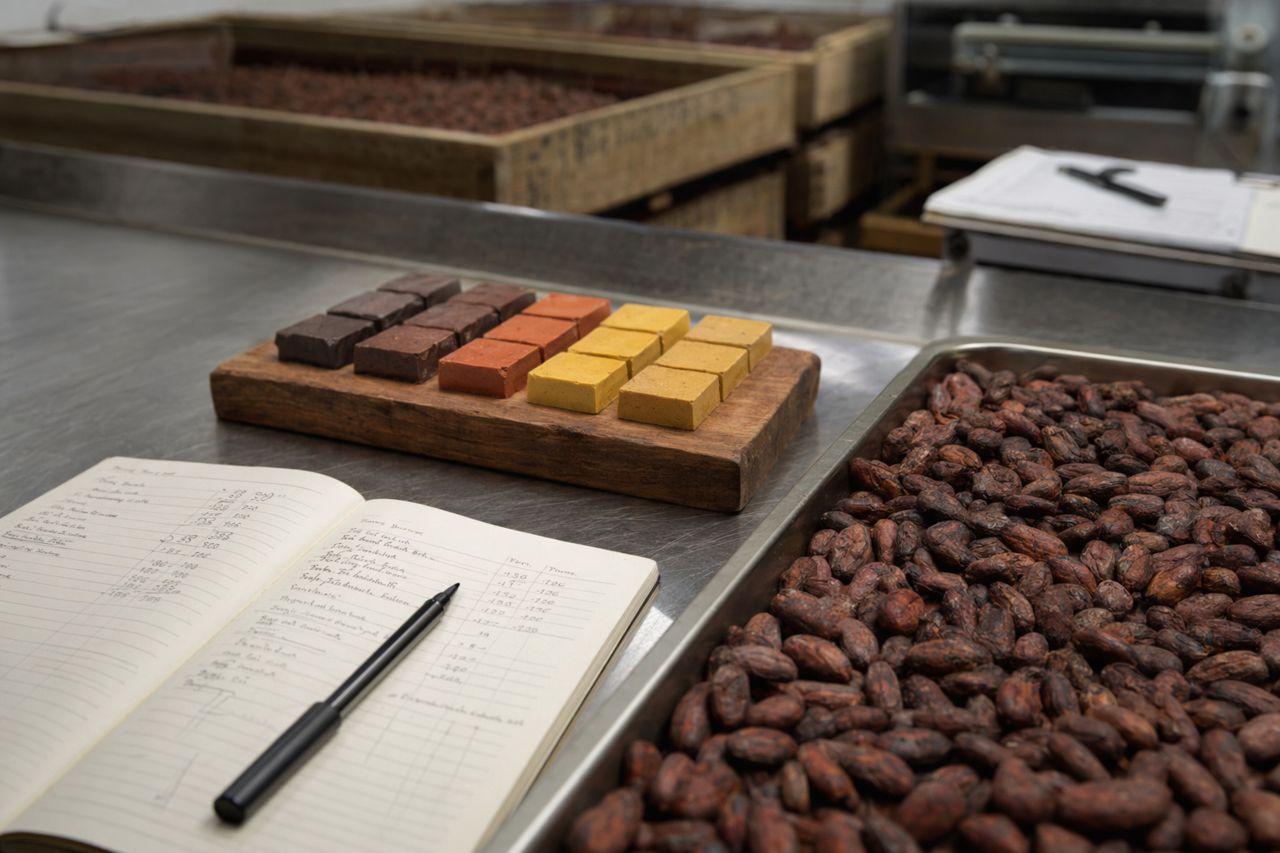
A practical trial plan may compare:
The objective is not to chase a perfect curve. The objective is to make the factory’s normal curve more reliable.
Over-fermentation and under-fermentation are opposite outcomes, but they often share the same root issue: the batch is not moving through pulp breakdown, heat generation, acidification, and bean development in a coordinated way.
Enzymesbase helps cocoa processors bring more control to that coordination with enzyme systems built around mucilage management and process repeatability.
If your fermentation line is losing consistency between lots, request a quote through the on-site form. Share your cocoa source, fermentation layout, current pain points, and target outcomes, and our team will recommend a practical starting point for evaluation.
Tell us your application and volume — we reply with pricing and lead time.
We have received your message. We will reply by email.