A plant-floor guide from Enzymesbase, an enzyme supplier for cocoa processing, on how pulp viscosity affects drainage, heat rise, turn timing, and fermentation repeatability in the first 48 hours.
Request pricingIn cocoa fermentation, the first 48 hours are not just a biological start-up period. They are a physical transition. Fresh pulp moves from sticky, gel-like mucilage toward a looser, draining mass, and that change affects heat rise, airflow, acid movement, cut-test color, and downstream flavor precursor development.
For fermentation managers, pulp viscosity is a control variable. As an enzyme supplier for cocoa processing, Enzymesbase looks at mucilage behavior the way a plant team looks at temperature slope or box fill weight: observable, logged, and improved batch by batch.
Cocoa pulp is rich in water, sugars, pectin structure, soluble solids, and suspended fruit material. At the start of fermentation, this matrix binds beans together and limits how quickly liquid can move through the box.
High viscosity in the first hours can create:
Low viscosity too early can create a different problem: rapid drainage, loss of cushioning around the beans, and a fermentation curve that runs ahead of the intended flavor plan.
The operational target is not maximum breakdown. The target is controlled breakdown.
During box loading, fresh mucilage is thick and cohesive. Beans settle into the fermentation mass, but liquid movement is still restricted. In this phase, the pulp helps maintain contact between beans, sugars, and native microbial populations.
Plant-floor signals to watch:
If the pulp remains extremely tight, the batch can begin with limited internal movement. That may delay heat rise and make the first turn feel heavier than expected.
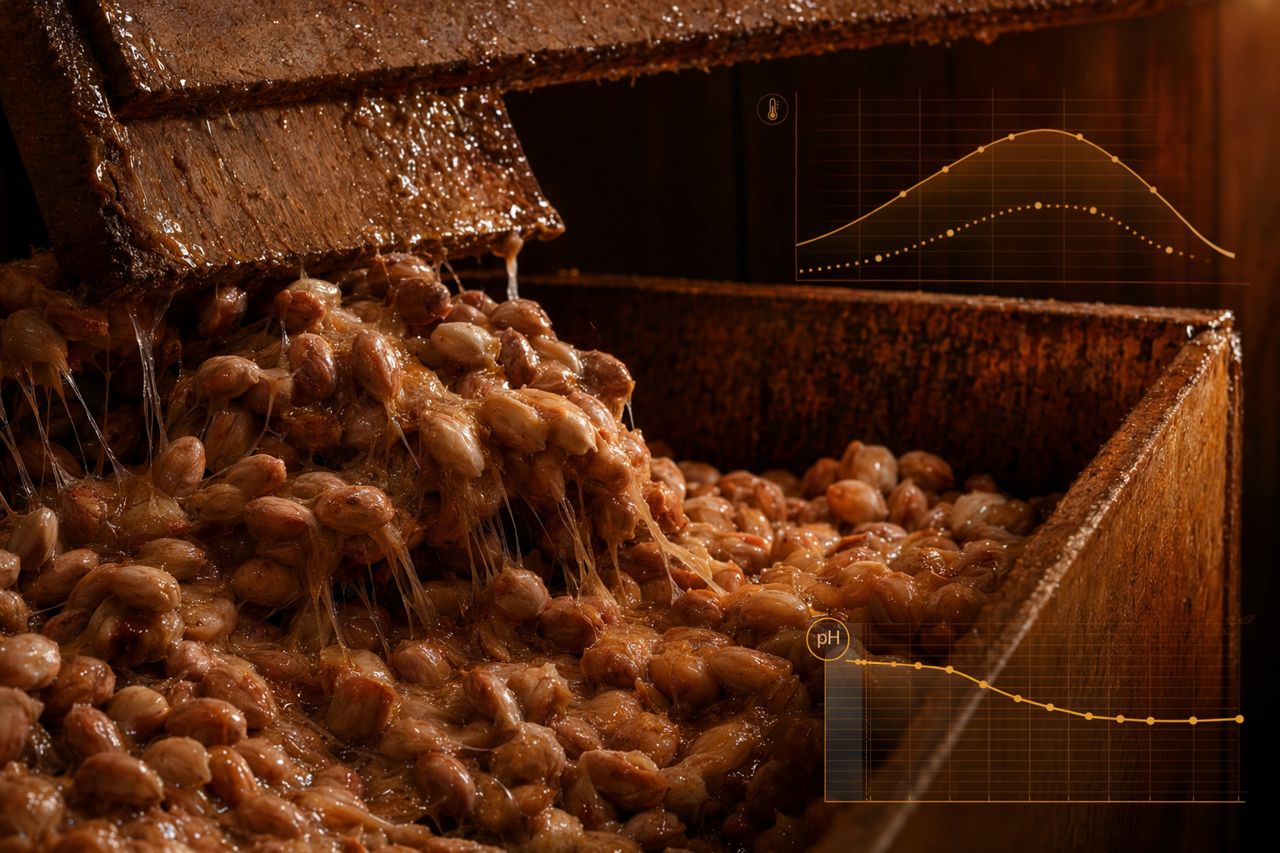
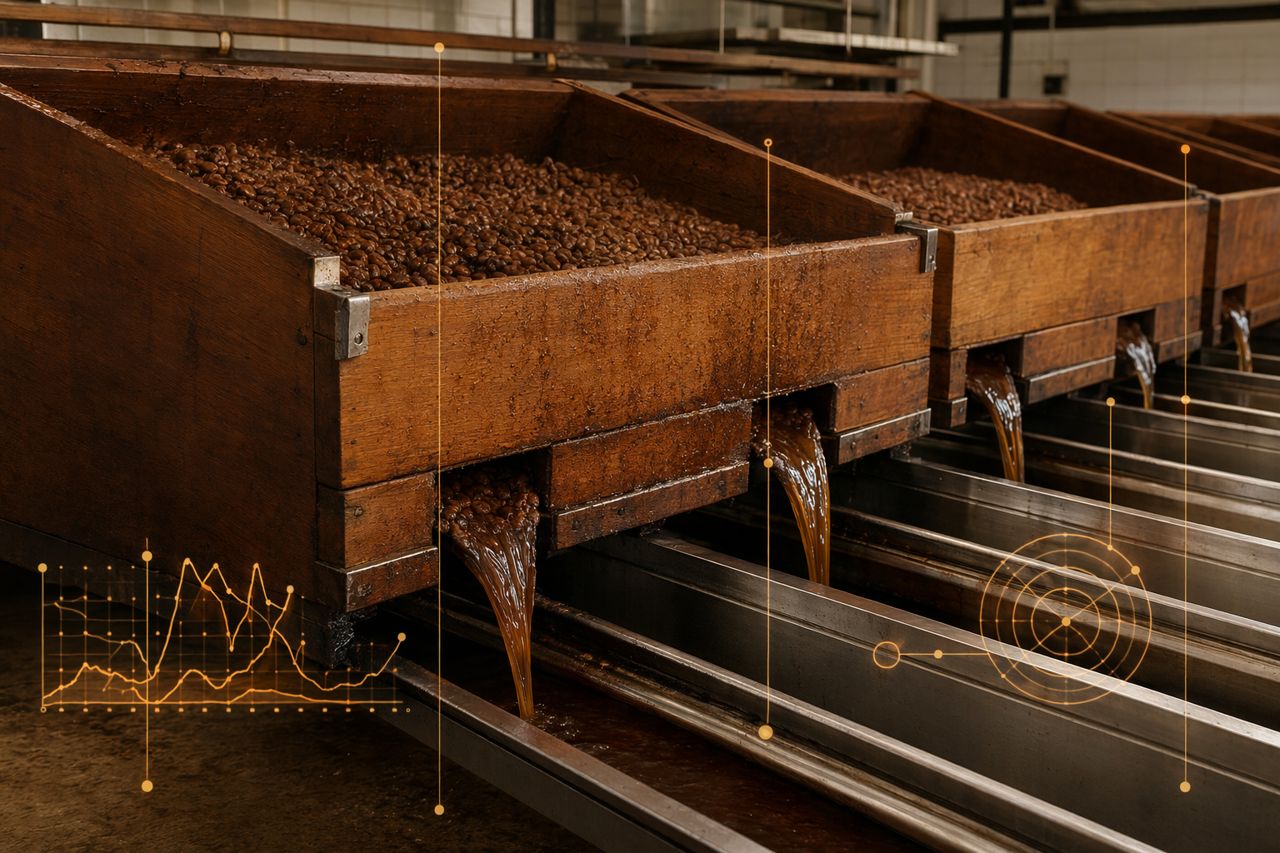
As fermentation activity increases, the pulp matrix starts to break down. Liquor release becomes more visible, and the bean mass begins to shift from compacted fruit to a more open fermentation bed.
This is where viscosity change becomes a process signal. A predictable reduction in pulp thickness supports more even drainage and helps the team read temperature and pH curves with greater confidence.
Operational outcomes to track:
A slow viscosity drop can hold the batch too wet. A fast drop can make the mass drain before sufficient fermentation heat and precursor development have been established.
By the second day, viscosity behavior starts to influence practical decisions. The team may be preparing for a turn, moving liquor away from the box, or comparing the batch against a standard fermentation curve.
At this stage, controlled mucilage breakdown supports:
This is also where a factory sees the cost of inconsistency. Two batches with the same bean mass and nominal fermentation time can behave differently if pulp viscosity changes at different rates.
Enzyme support is not a shortcut around fermentation management. It is a process aid for mucilage control.
Enzymesbase designs enzyme supply programs around practical factory variables: fruit maturity, pulp load, box depth, fill weight, target flavor style, drainage design, and the plant team's preferred turn schedule. The aim is to help the pulp structure loosen at a more useful rate, so fermentation managers can run repeatable batches instead of reacting to surprise wetness.
Potential plant benefits include:
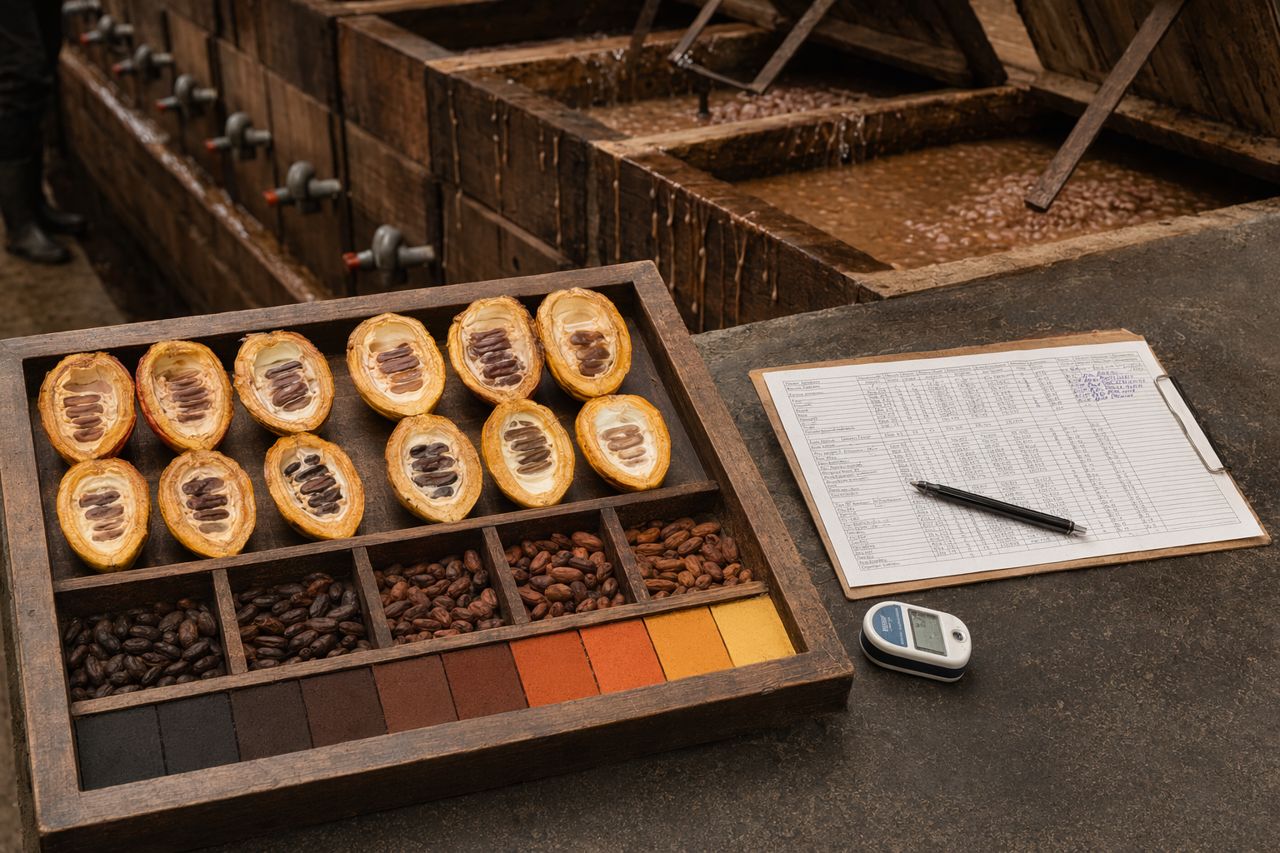
If viscosity is not already part of the batch record, start with simple observations that operators can capture consistently.
Recommended log points:
These records help separate raw material variation from process variation. They also give procurement and production teams a shared language when comparing farms, origins, harvest windows, and fermentation assets.
Consider a viscosity-focused review if your cocoa processing factory sees:
A controlled enzyme program can help stabilize the first 48 hours without forcing the plant into a one-size-fits-all fermentation model.
Enzymesbase is built for cocoa processors who need batch control, not generic enzyme language. If your team is evaluating mucilage management, drainage repeatability, or first-48-hour fermentation behavior, we can help define a practical supply approach for your plant.
Request a quote and include your bean origin, fermentation box design, typical fill weight, target fermentation time, and the first 48-hour challenges you want to control.
Tell us your application and volume — we reply with pricing and lead time.
We have received your message. We will reply by email.