Theobrix Works
Enzyme supplier for cocoa processing teams that manage fermentation by data, not guesswork
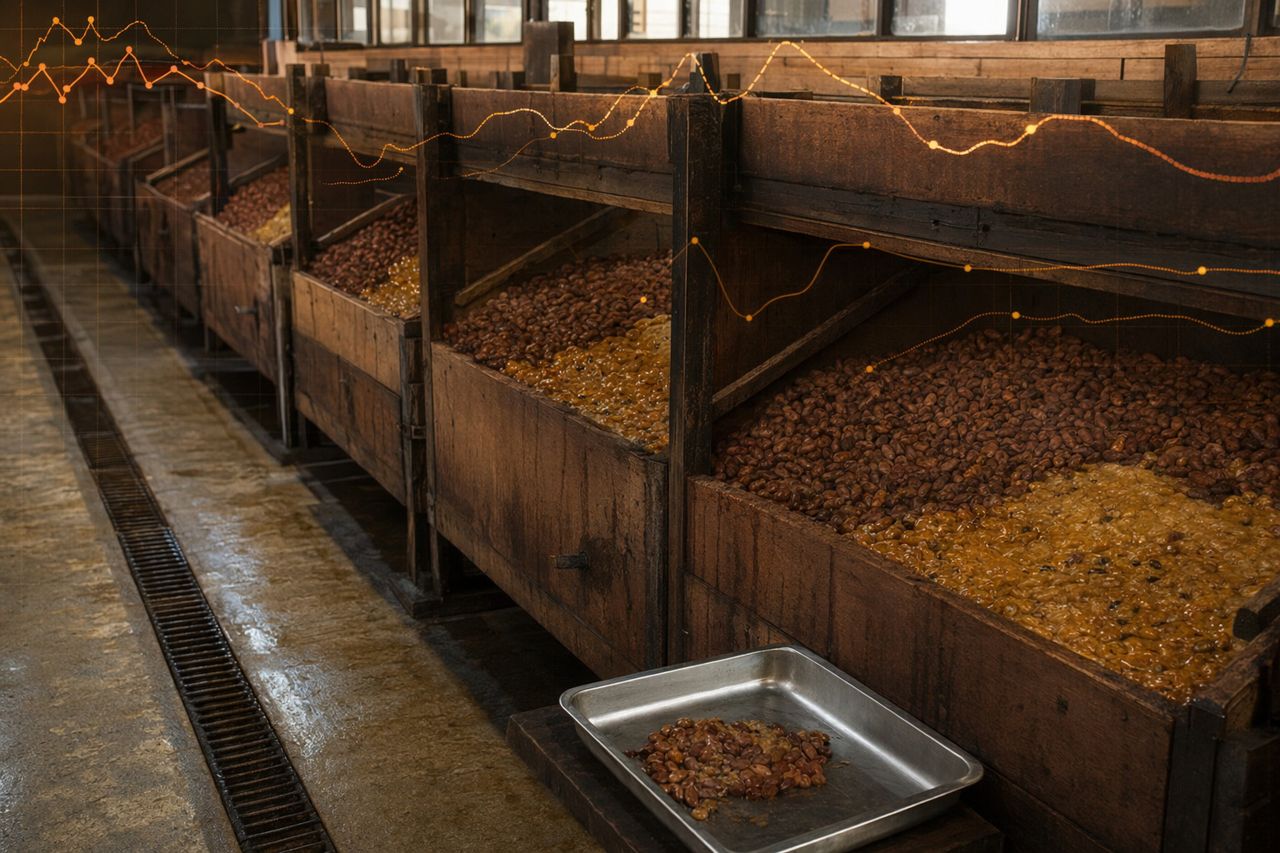
Cocoa fermentation is a plant-floor control problem: pulp behavior, heat rise, aeration, acidity, drainage, bean size, harvest variability, and box turnover all move together. Theobrix Works helps cocoa processing factories apply enzyme-assisted methods with practical discipline, so fermentation managers can reduce drift and make batch outcomes easier to repeat.
We support processors using pectinase, cellulase, and protease pathways to manage mucilage breakdown, bean mass behavior, and flavor precursor development without turning fermentation into a black box.
Built for the fermentation box, not the brochure
Theobrix Works works with cocoa processors that need decisions they can defend on the factory floor. Our guidance is designed around real batch constraints:
- Variable pod maturity and pulp load
- Wet-season drainage pressure
- Mixed-origin bean lots
- Wooden box, heap, tray, or controlled-vessel fermentation
- Temperature curve instability
- pH movement and acid retention concerns
- Cut-test inconsistency across positions in the mass
- Drying bottlenecks caused by excess pulp carryover
As an enzyme supplier for cocoa processing, we focus on application fit, handling practicality, repeatable trials, and scale-up discipline.
What enzyme-assisted cocoa processing can help control
Faster, cleaner mucilage breakdown
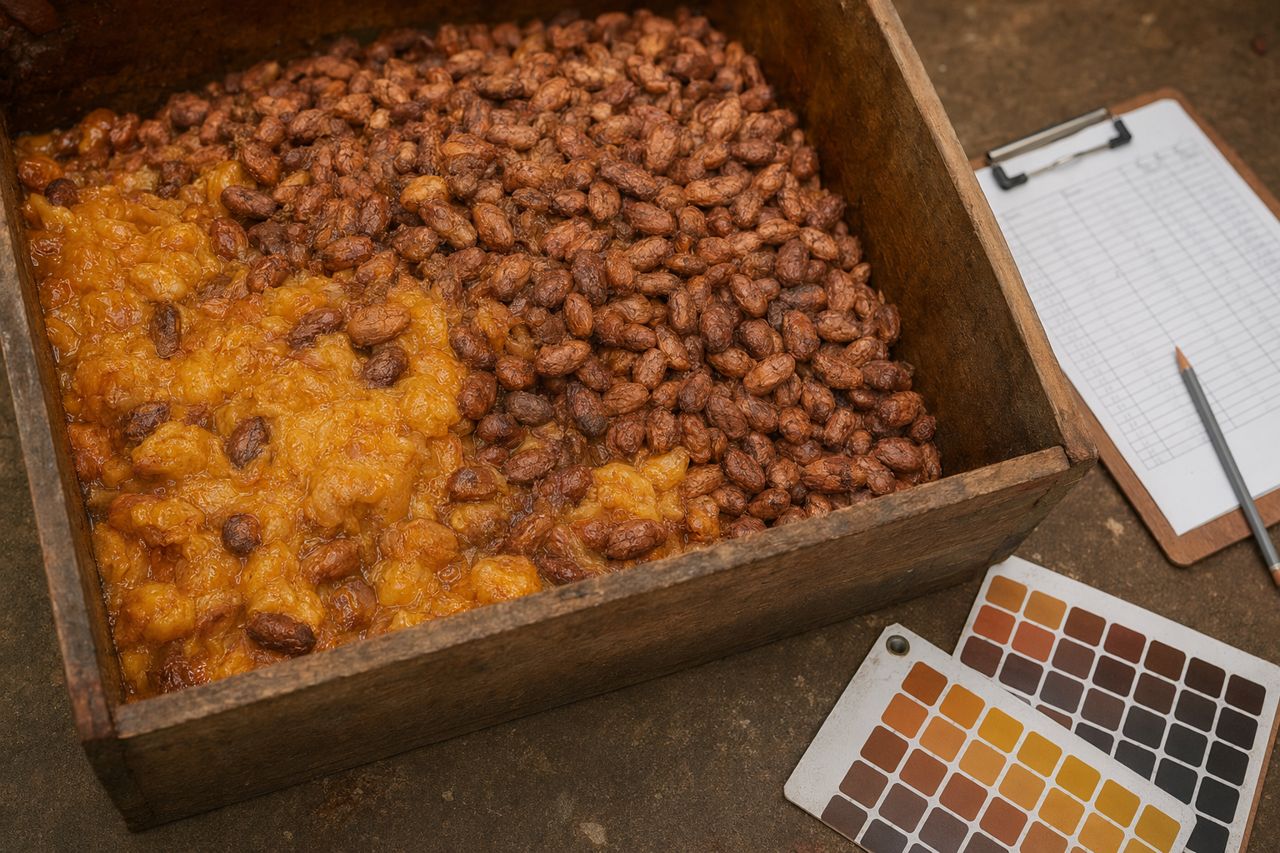
Pectin-rich pulp can slow drainage, trap heat unevenly, and make turning schedules harder to control. Pectinase-focused support can help processors improve pulp liquefaction behavior, reduce sticky mass handling, and move toward more predictable drainage timing.
More manageable bean mass conditions
When pulp breakdown is inconsistent, oxygen transfer, heat development, and microbial progression become harder to steer. Enzyme-assisted processing can help create a more uniform physical environment, making temperature rise and turning response easier to interpret.
More consistent flavor precursor development
Cocoa flavor is built through controlled biological and biochemical change, not through a single ingredient. Protease and cellulase pathways may support precursor availability and bean structure effects when applied within a properly managed fermentation program.
Less batch-to-batch surprise
The goal is not to force every lot into the same profile. The goal is to reduce unnecessary variation so your team can see what is caused by origin, season, process choice, or plant-floor execution.
Enzyme pathways we support
Pectinase for pulp and mucilage management
Pectinase programs are typically considered when the plant needs better pulp breakdown, improved drainage behavior, and more predictable mass handling. We help define how the enzyme fits into your fermentation start, dilution practice, mixing method, and batch documentation.
Cellulase for structure and accessibility
Cellulase may be evaluated where bean mass texture, pulp residue, and substrate accessibility affect process repeatability. We help processors assess whether cellulase belongs in the program, or whether mechanical and fermentation controls should be adjusted first.
Protease for precursor-oriented trials
Protease support is used carefully, with attention to sensory targets, fermentation timing, and downstream roasting expectations. Theobrix Works helps teams run controlled comparisons rather than making unsupported changes to a proven process.
Our plant-floor development method
1. Map the current batch behavior
We start with the process you already run: box size, loading practice, turn schedule, pulp drainage, temperature curve, pH trend, cut-test results, drying response, and final quality feedback.
2. Define the enzyme objective
Each trial needs one clear purpose. Examples include improving pulp release, reducing sticky handling, stabilizing heat rise, tightening cut-test distribution, or improving precursor consistency for a defined product stream.
3. Run control and enzyme-assisted batches side by side
We help structure comparisons that your team can execute without disrupting daily production. The emphasis is practical observation, documented process conditions, and clear go/no-go criteria.
4. Scale only when the data holds
If the pilot works, we support scale-up with handling recommendations, procurement planning, lot documentation, and repeatability checks.
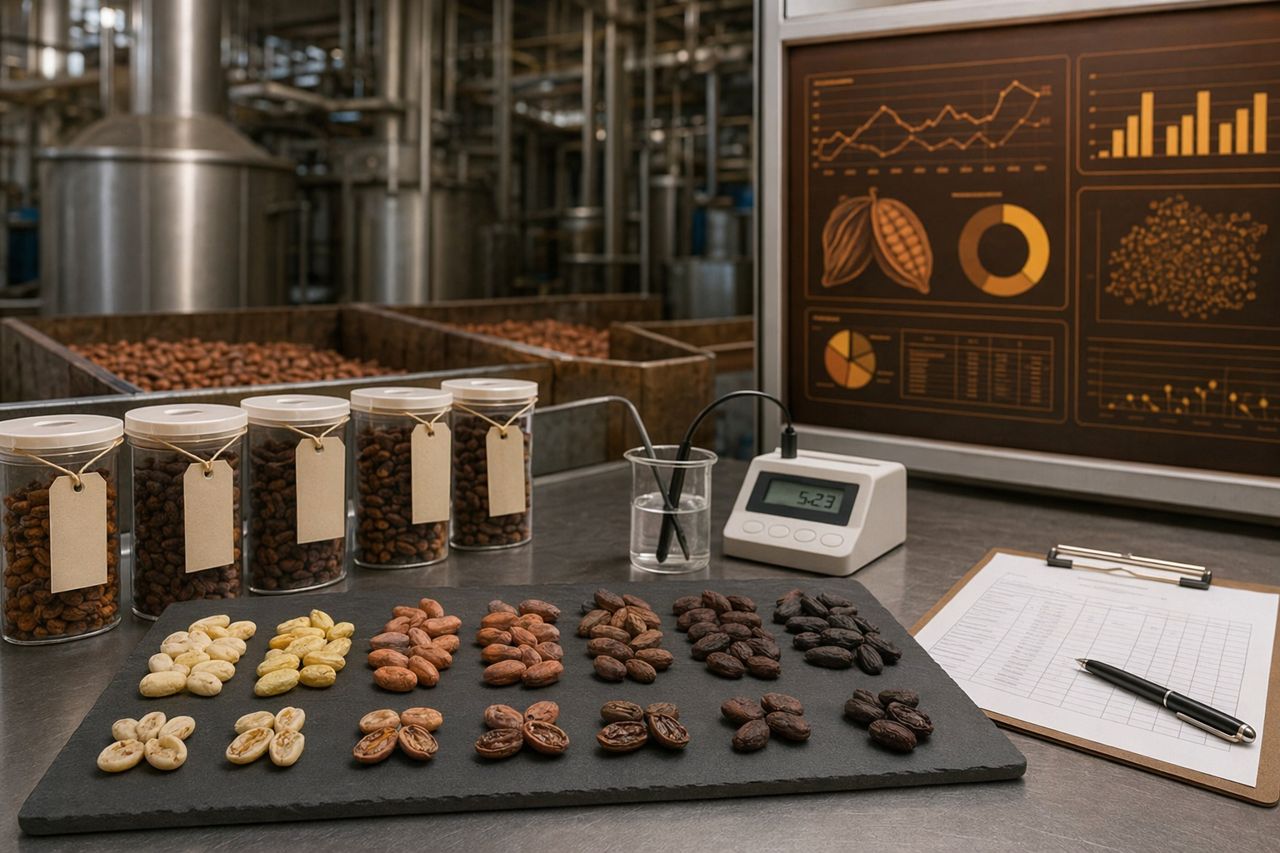
Metrics fermentation managers can track
Theobrix Works recommends evaluating enzyme-assisted cocoa processing against operational and quality indicators such as:
- Time to visible pulp release
- Drainage volume and timing profile
- Temperature rise shape and recovery after turning
- pH movement through the fermentation window
- Bean mass uniformity by box position
- Cut-test color distribution
- Pulp residue after fermentation
- Drying load and drying time pressure
- Rework, downgrade, and rejection patterns
- Sensory and roast feedback from downstream teams
These are the numbers that help determine whether an enzyme program is improving the process or only adding complexity.
Why processors choose Theobrix Works
- Cocoa-specific fermentation thinking
- Practical enzyme selection for pectinase, cellulase, and protease pathways
- Pilot-first recommendations before scale-up
- Support for batch records and process comparison
- Supply planning for industrial cocoa processing needs
- Calm technical guidance for teams that need repeatability, not hype
Request a quote
If you are evaluating an enzyme supplier for cocoa processing, send Theobrix Works your fermentation objective, approximate batch scale, bean origin or mix, current process window, and the challenge you want to solve.
Use the on-site request form to ask for a quote and a pilot-ready recommendation. We will respond with practical options for your cocoa processing factory.